
My Philosophy
Throughout my career, I’ve found that organizations often describe one problem while users experience another. Layered on top of that are the subtle behaviors, motivations, environmental constraints, and workflow realities that rarely appear in a project brief—but ultimately determine whether a solution succeeds.
That’s where my work begins.
I partner with organizations across several industries including, Healthcare, Life Sciences, and Education, to move beyond assumptions and uncover the factors that shape real-world decisions. Through behavioral research, human factors engineering, systems thinking, and hands-on product design, I help teams define the right problem before investing in the solution.
My Approach
I don’t see strategy and execution as separate disciplines.
The strongest products emerge when thoughtful research, organizational alignment, and design execution work together as a continuous process.
That means I’m just as comfortable facilitating executive workshops and synthesizing behavioral research as I am opening Figma, refining interaction models, evolving design systems, collaborating with engineering, or preparing implementation-ready documentation.
For me, strategy only creates value when it becomes something people can actually use.
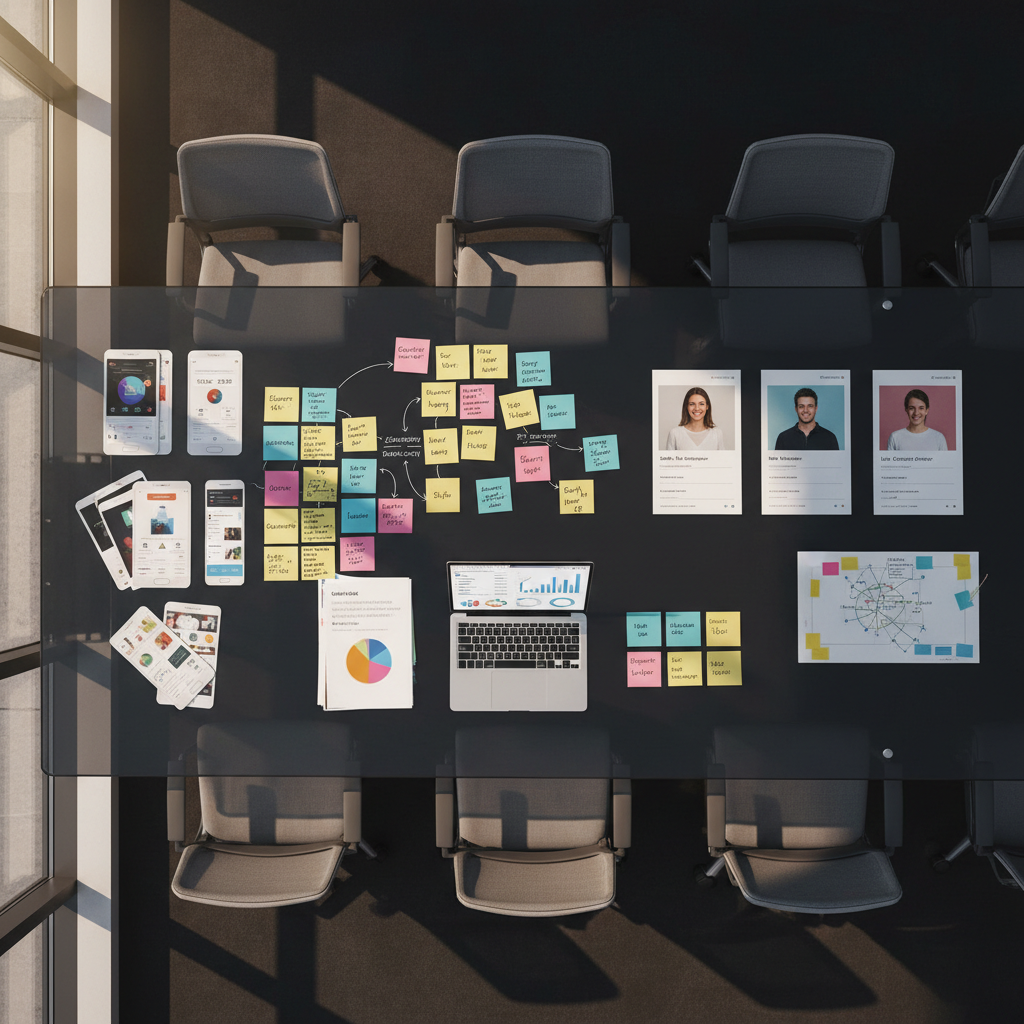
HOW I WORK
Over the years, I’ve become increasingly interested in the relationship between human behavior and technology.
Whether I’m studying why patients misuse an auto-injector, reducing cognitive load for clinicians managing multiple healthcare systems, improving trust between physicians and nursing teams, or exploring conversational AI to guide patients through complex healthcare experiences, I’m ultimately asking the same question: What is preventing people from confidently making the next decision?
The answer is rarely the interface alone.
More often, it’s a combination of workflow, communication, trust, accessibility, context, and competing priorities.
Those are the problems I enjoy solving.
HOW I PARTNER
Every engagement is different, but my process consistently follows the same rhythm.
Understand the Request
Every project begins with a business objective, product request, or organizational challenge.
Discover What Matters
Research, observation, stakeholder collaboration, workflow analysis, and behavioral insight often reveal opportunities that weren’t initially visible.
Shape the Strategy
Once the underlying problem is understood, I work with cross-functional teams to evaluate tradeoffs, explore concept directions, and build alignment around the strongest path forward.
Design & Deliver
Strategy becomes real through production-ready experiences—including interaction design, Figma prototypes, accessibility, design systems, engineering collaboration, validation, and implementation support.
Measure the Outcome
The goal isn’t simply to produce better interfaces.
It’s to leave organizations with greater clarity, stronger alignment, and more confidence in the decisions shaping their products.
HOW I DESIGN
Rather than organizing my experience around tools, I organize it around the kinds of problems I help solve.
Behavioral Design
Understanding how people actually think, decide, and behave in real-world environments.
Human Factors Engineering
Reducing risk and improving usability within FDA-regulated healthcare products.
Enterprise Product Design
Designing scalable workflows for clinicians, patients, researchers, and administrators.
Design Systems
Creating systems that improve consistency while enabling teams to move faster.
Accessibility
Building experiences that are inclusive, compliant, and usable by everyone.
AI-Assisted Design
Exploring conversational AI and intelligent workflows that reduce cognitive load and support better decision-making.
What You Can Expect Working With Me
I strive to create an environment where Product, Engineering, Clinical SMEs, and business stakeholders have a shared understanding of the problem, confidence in the direction, and the evidence needed to move forward.
One question guides every engagement: What decision can we make now that we couldn’t confidently make at the beginning of this sprint?
If we can answer that question at the end of every iteration, we’re making meaningful progress.
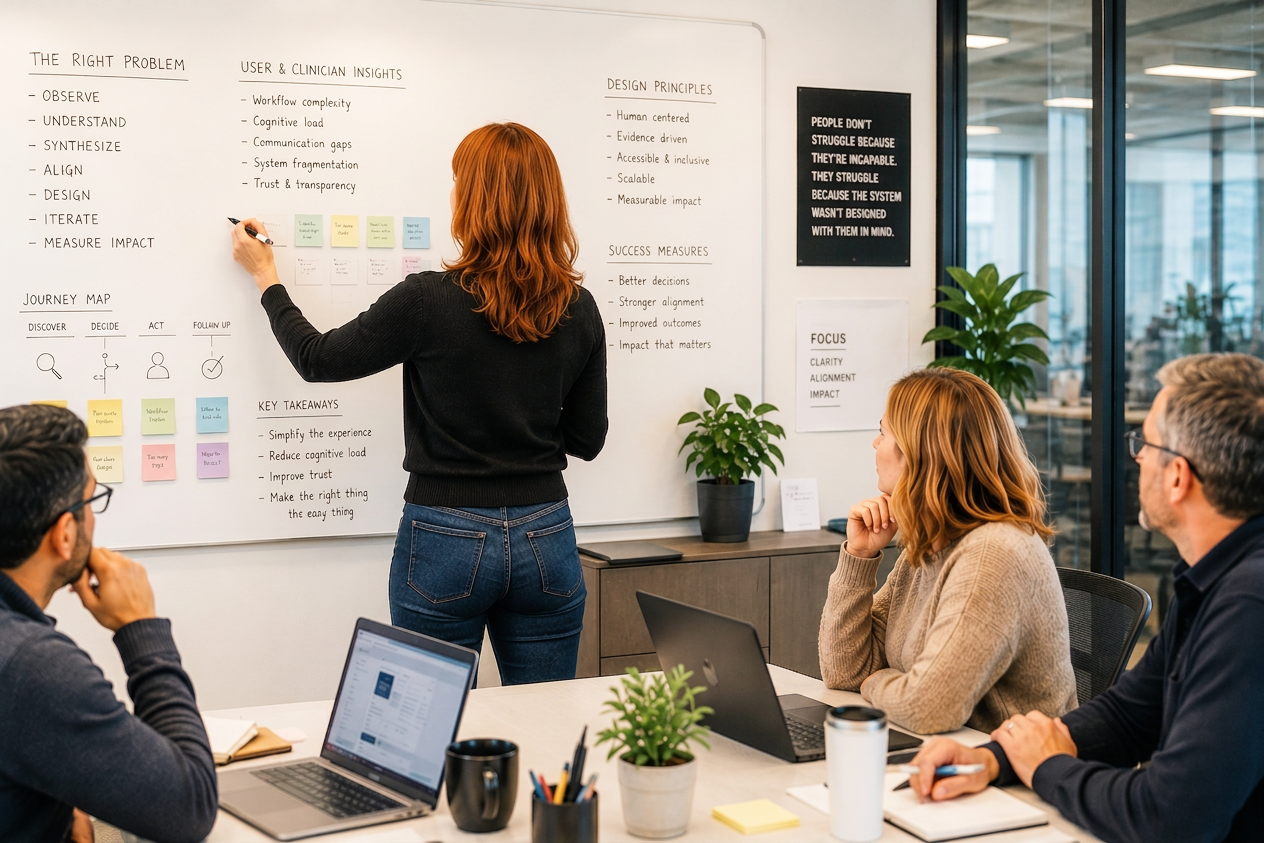
Testimonials
Jenn’s creativity and versatility allowed her to contribute across multiple facets of UX design, making her an invaluable asset to our projects. I highly recommend Jenn to any organization looking for a talented, dedicated, and innovative UX professional.
Peter Haung, Product Design/Strategy
Scholastic
Jenn is passionate, keeps the view of the customer, curious, and is a loyal teammate. She also has a breadth of skills cultivated from a wide array of experiences, through which she is able to bring deep expertise to her work. Happy to share more!
Alexa Rohan, Chief of Staff
WellBeam
Working with Jenn, we reduced onboarding friction by grounding every decision in research and systematically evolving our design system instead of shipping one-off UI fixes.
Daniel Kim, Engineering Lead
Amgen
 Jenn Isbell | Principal Product Designer / Strategist