
Transforming Human Behavior into Safer Product Experiences
Applying Human Factors Engineering and evidence-based design to improve patient safety, inform product strategy, and develop scalable communication standards for an FDA-regulated medical device.
Project Context
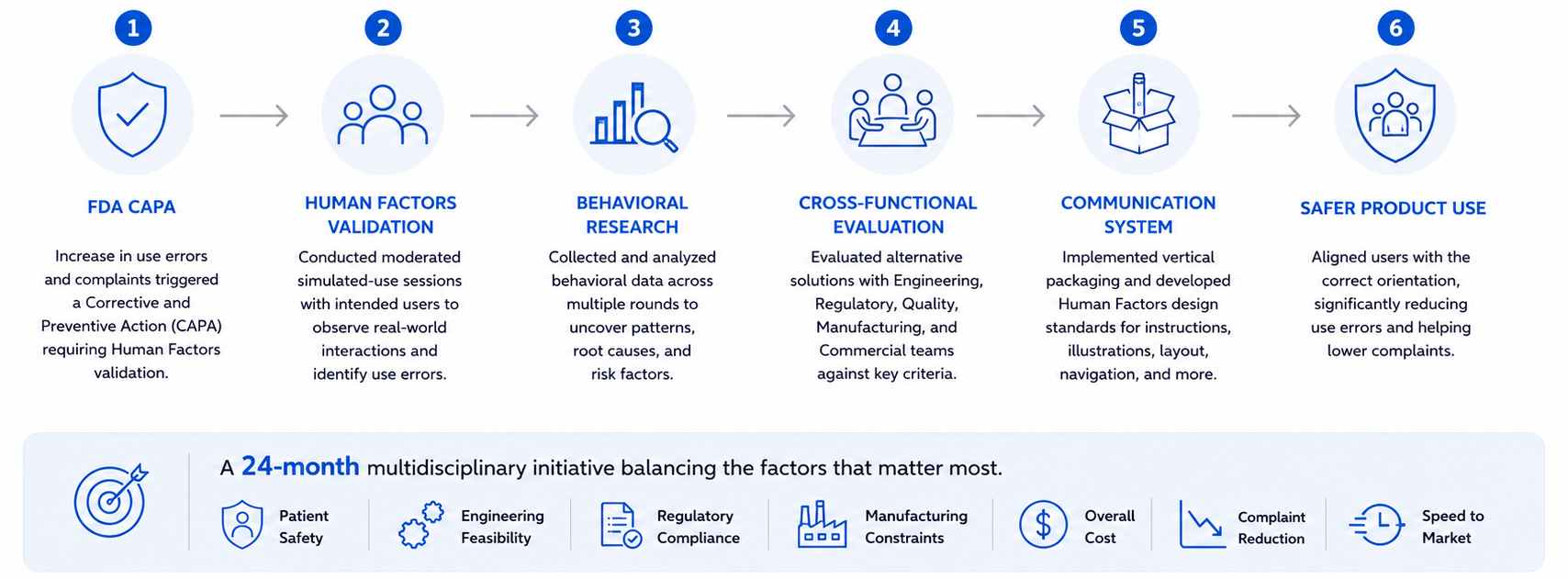
Amgen initiated this Human Factors Engineering effort as part of a Corrective and Preventive Action (CAPA) investigation after customer feedback identified orientation-related use concerns associated with the SureClick® Amjevita® auto-injector. Although the initial assumption was that the injector itself might require redesign, the objective of the investigation was to determine whether the observed use errors originated from the device, the packaging, the instructions for use, or the user’s mental model before interacting with the product.
Operating within an FDA-regulated environment meant every recommendation required objective evidence and cross-functional alignment. Even seemingly minor design changes have downstream implications for engineering, manufacturing, validation, regulatory submissions, and patient safety. Rather than beginning with solutions, the team adopted a Human Factors Engineering approach that prioritized behavioral observation, root cause analysis, and multidisciplinary evaluation.
My Role
My role focused on supporting Human Factors research, synthesizing behavioral findings, and helping translate evidence into design recommendations that balanced patient safety, engineering feasibility, manufacturing constraints, regulatory compliance, implementation speed, and cost.
The Business Challenge
The central business challenge was reducing use-related risk without introducing unnecessary complexity into an already validated medical device. From a product strategy perspective, redesigning the injector represented the highest cost and greatest regulatory impact, while making no change left the organization exposed to recurring use-related issues.
The project therefore required balancing competing priorities: improving patient safety, preserving manufacturing efficiency, maintaining regulatory compliance, minimizing implementation effort, and identifying the intervention that most effectively addressed the true root cause. Success depended on understanding why participants behaved the way they did instead of reacting only to the visible outcome.
The Problem Statement
During the administration of the medication Amjevita®, users were frequently orienting the SureClick® auto-injector incorrectly, resulting in more than 18,000 complaints pertaining to failed injections. This error required an FDA-regulated CAPA compliance study to carefully investigate the cause of the failures. The challenge was not simply to reduce errors, but to determine the safest and most practical intervention across multiple competing constraints like budget, technical feasibility, and time-to-market.
What the Problem Looks Like
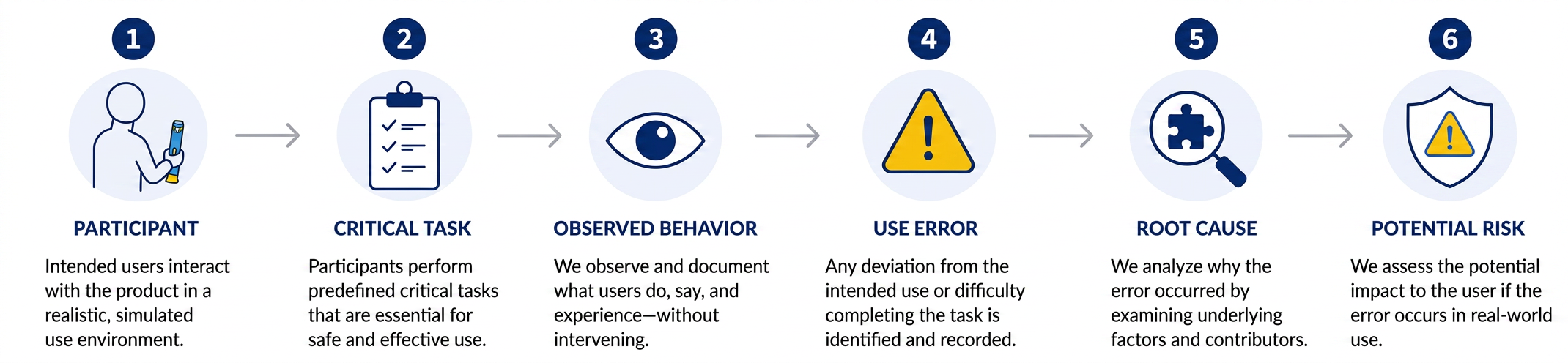
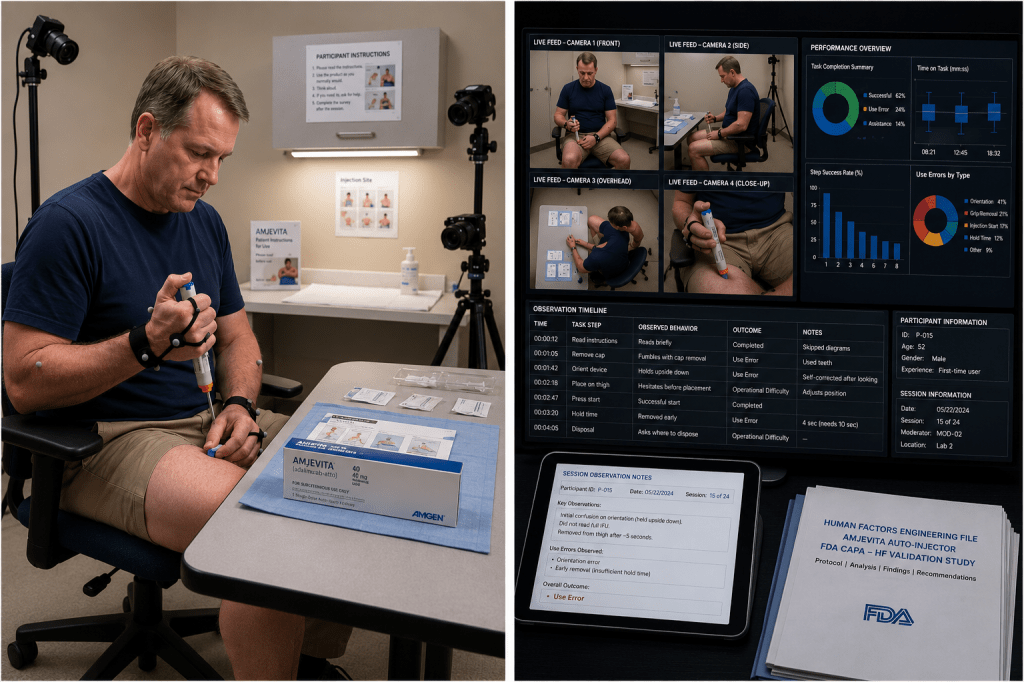
Over approximately twenty-four months, intended users participated in simulated-use sessions that replicated real-world conditions. Instead of evaluating aesthetics or interface preferences, the team carefully documented behaviors, hesitation, orientation, hand placement, recovery actions, verbal feedback, and critical task completion.
Research Strategy
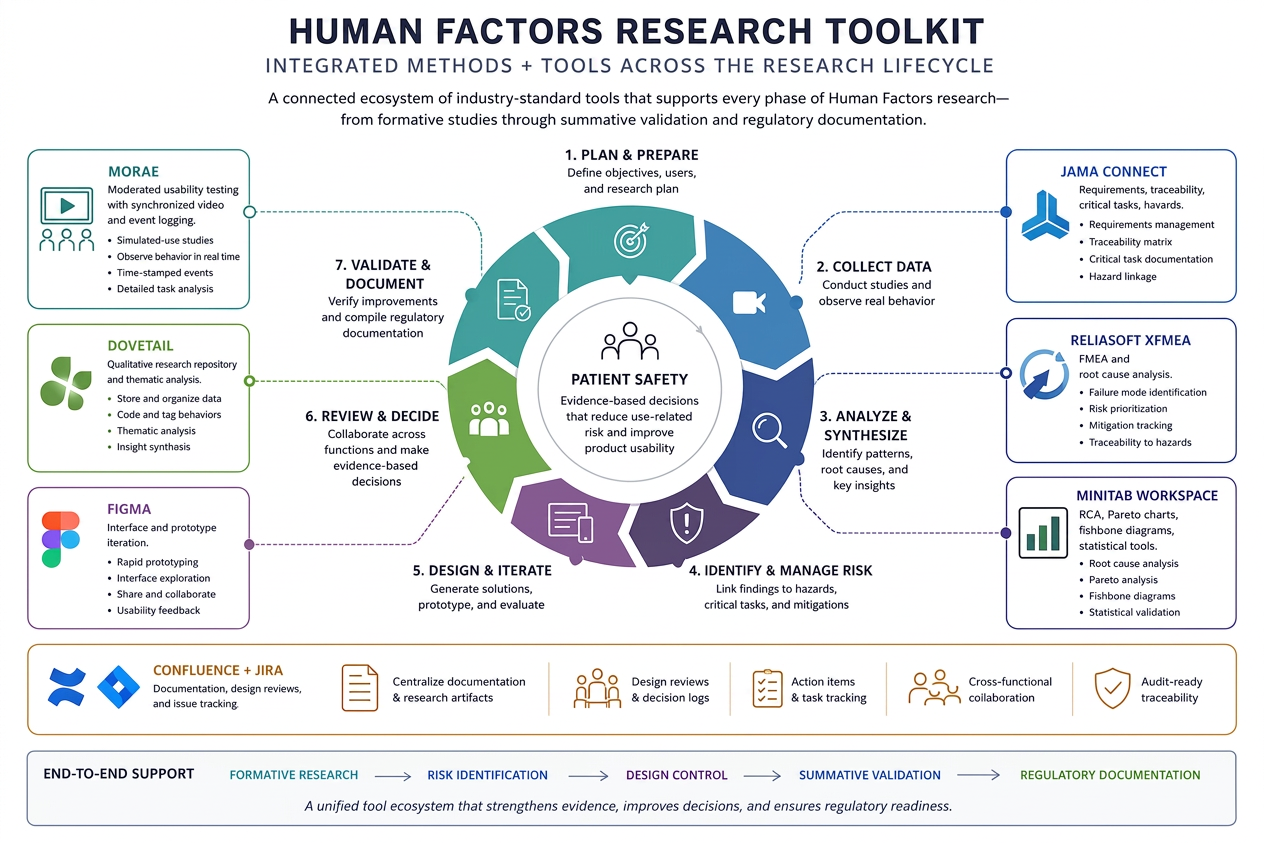
The investigation combined simulated-use studies, contextual observation, behavioral task analysis, critical task identification, use-error analysis, root cause analysis, and cross-functional design reviews. Observational methods were intentionally prioritized because Human Factors Engineering relies on demonstrated behavior rather than self-reported opinions.
Industry-standard tools supported each phase of the research lifecycle. Morae captured synchronized video and event logs during moderated studies. Dovetail facilitated qualitative coding and thematic analysis. Jama Connect maintained traceability between requirements, critical tasks, hazards, and mitigations. ReliaSoft XFMEA and Minitab Workspace supported structured risk and root cause analysis. Figma enabled iterative concept exploration, while Jira and Confluence documented decisions and coordinated multidisciplinary reviews.
What We Discovered
“The problem wasn’t the injector. The problem was the mental model users built before they ever picked it up.”
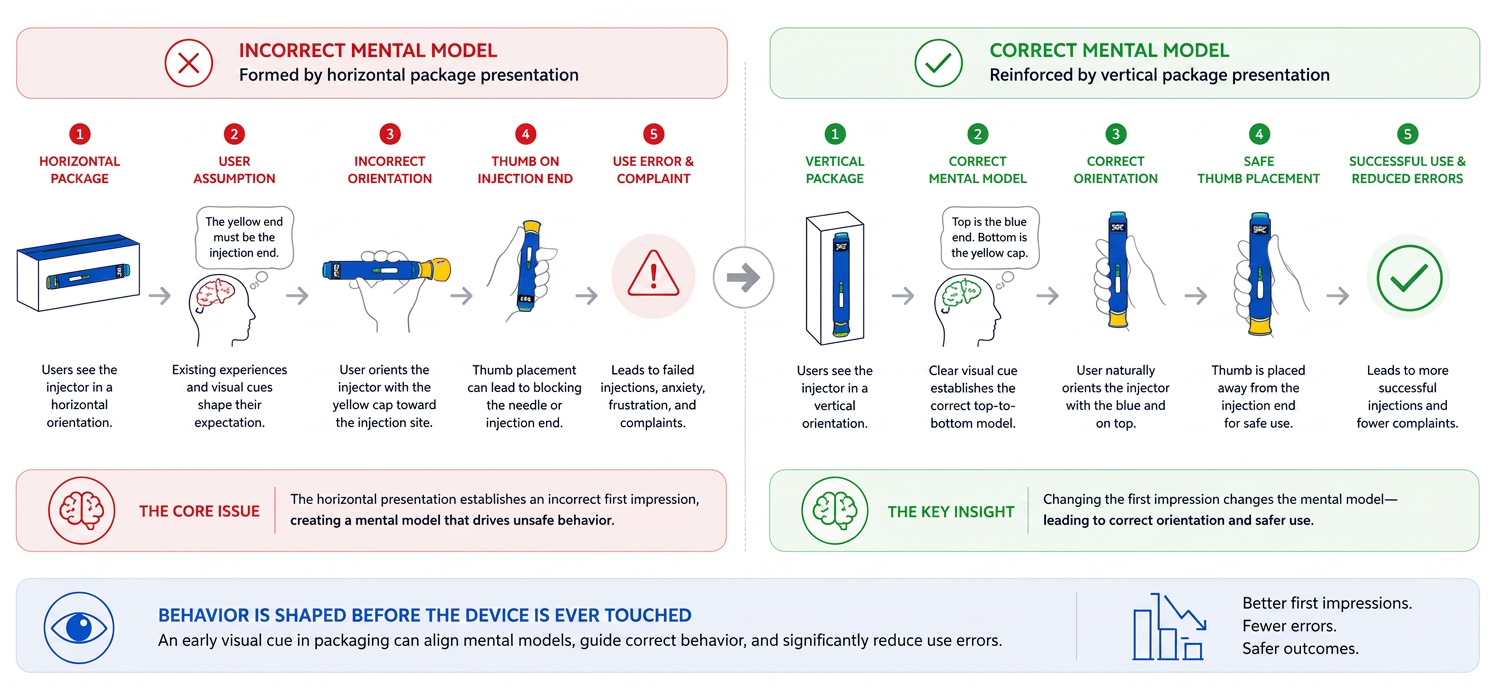
Across multiple participant sessions, a consistent behavioral pattern emerged. Users frequently established an incorrect mental model before removing the injector from its package. Their subsequent actions were consistent with that initial assumption, revealing that the first interaction with the product—not the injection sequence itself—was influencing behavior.
This insight shifted the team’s focus away from redesigning the injector and toward redesigning the communication occurring before first use. Rather than treating the observed error as an isolated mistake, the team recognized it as evidence of a broader interaction problem rooted in presentation and orientation.
Design Strategy
Rather than jumping to a redesign, the team evaluated multiple alternatives: hardware modifications, labeling changes, Instructions for Use revisions, training interventions, and packaging orientation changes. Every option was evaluated against behavioral evidence and practical implementation considerations.
Multiple interventions were evaluated, including hardware redesign, instruction revisions, labeling updates, additional training, and packaging modifications. Each option was assessed against patient safety, engineering feasibility, regulatory impact, manufacturing complexity, implementation cost, and speed to deployment.
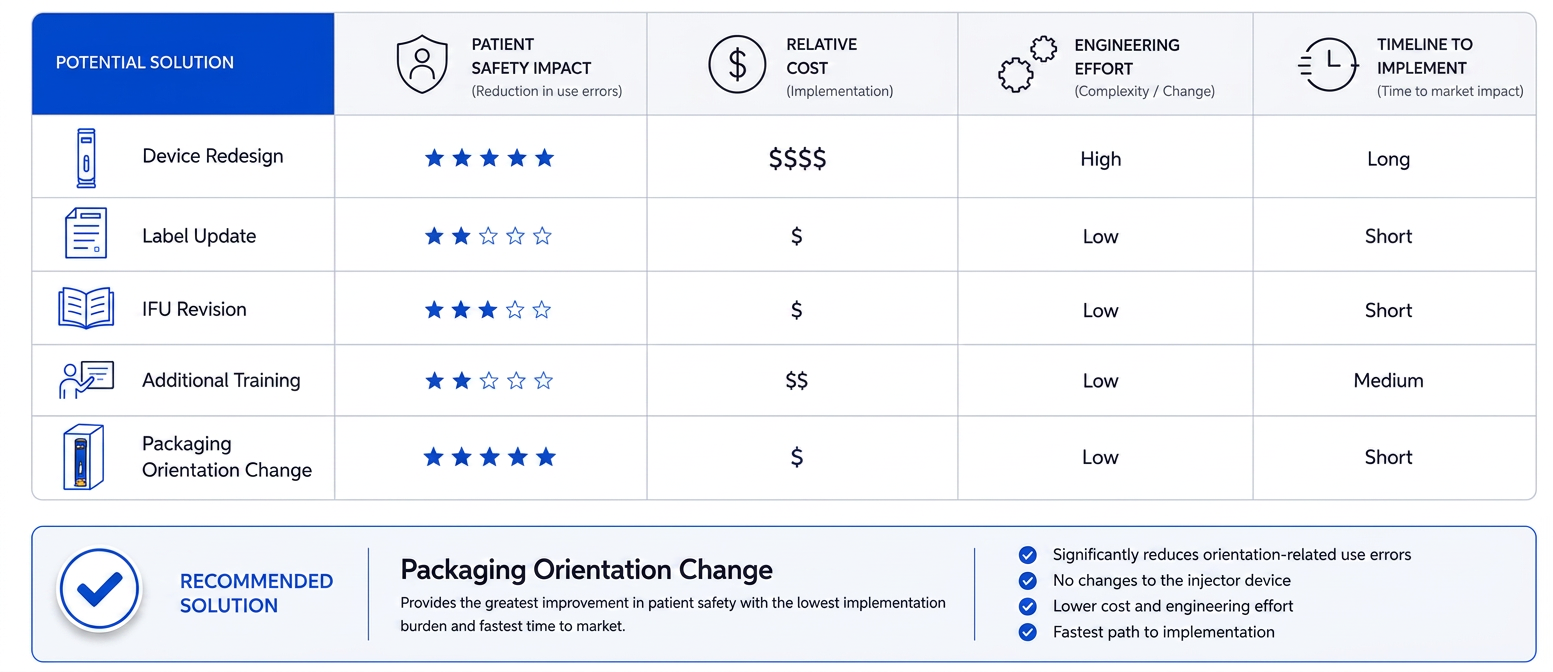
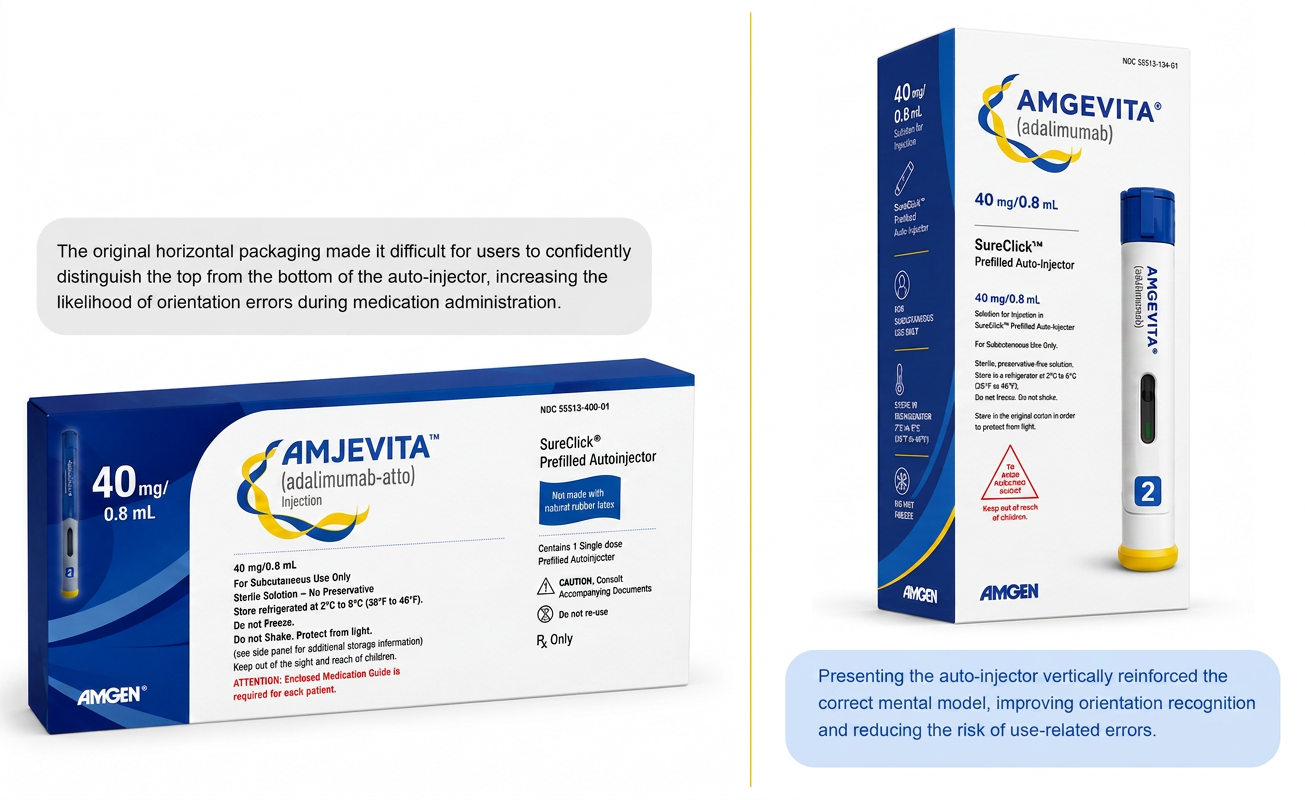
The behavioral evidence consistently pointed toward one recommendation: present the injector vertically inside its package. Changing the package orientation changed the user’s first impression, reinforcing the correct top-to-bottom mental model before the injector was removed. The recommendation avoided unnecessary hardware redesign while addressing the root cause identified through observation.
Solution and Implementation
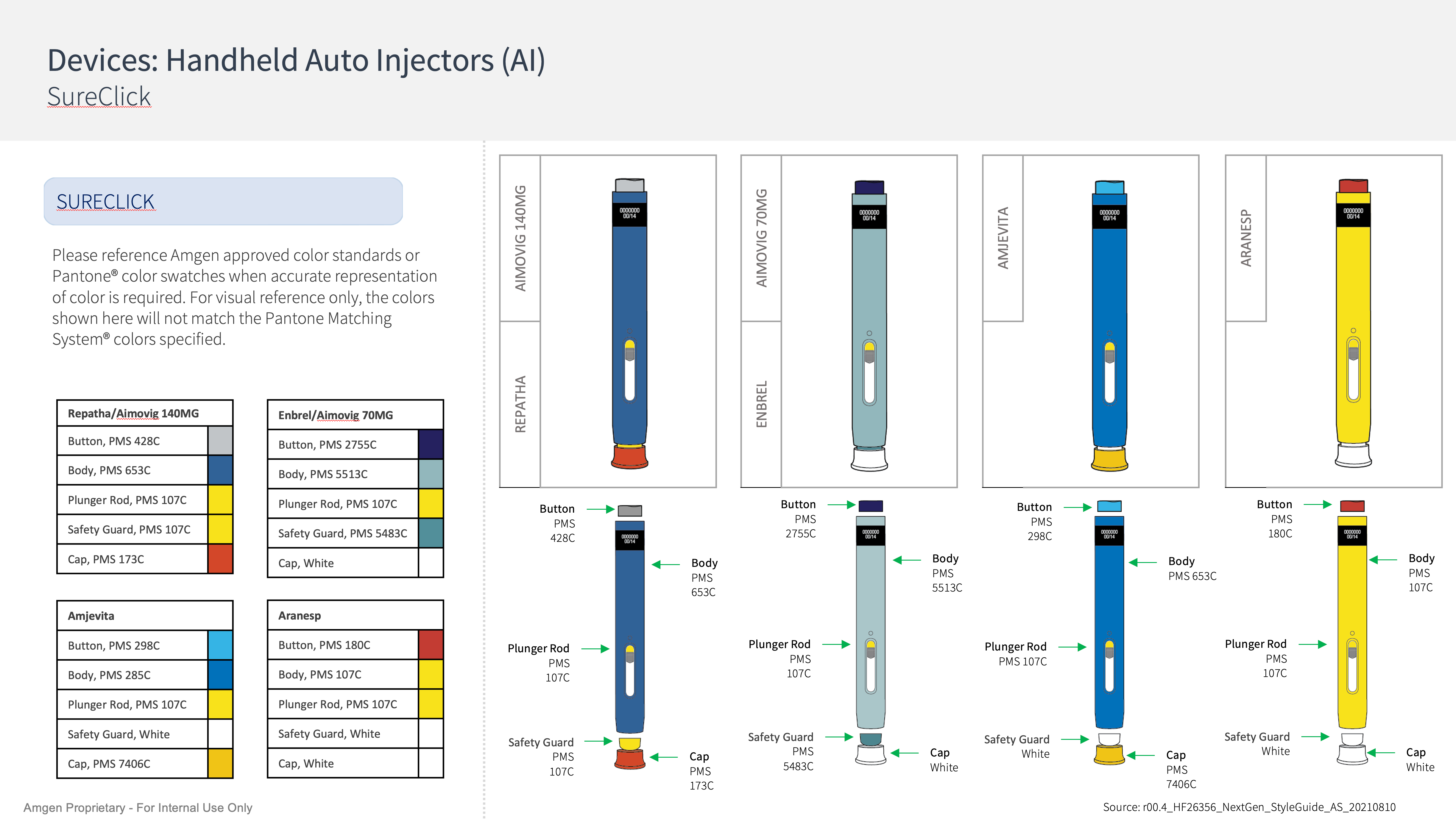
The approved strategy centered on changing package orientation from a horizontal presentation to a vertical presentation. While visually subtle, this adjustment better aligned the product presentation with users’ expectations and reduced opportunities for orientation-related confusion during initial interaction.
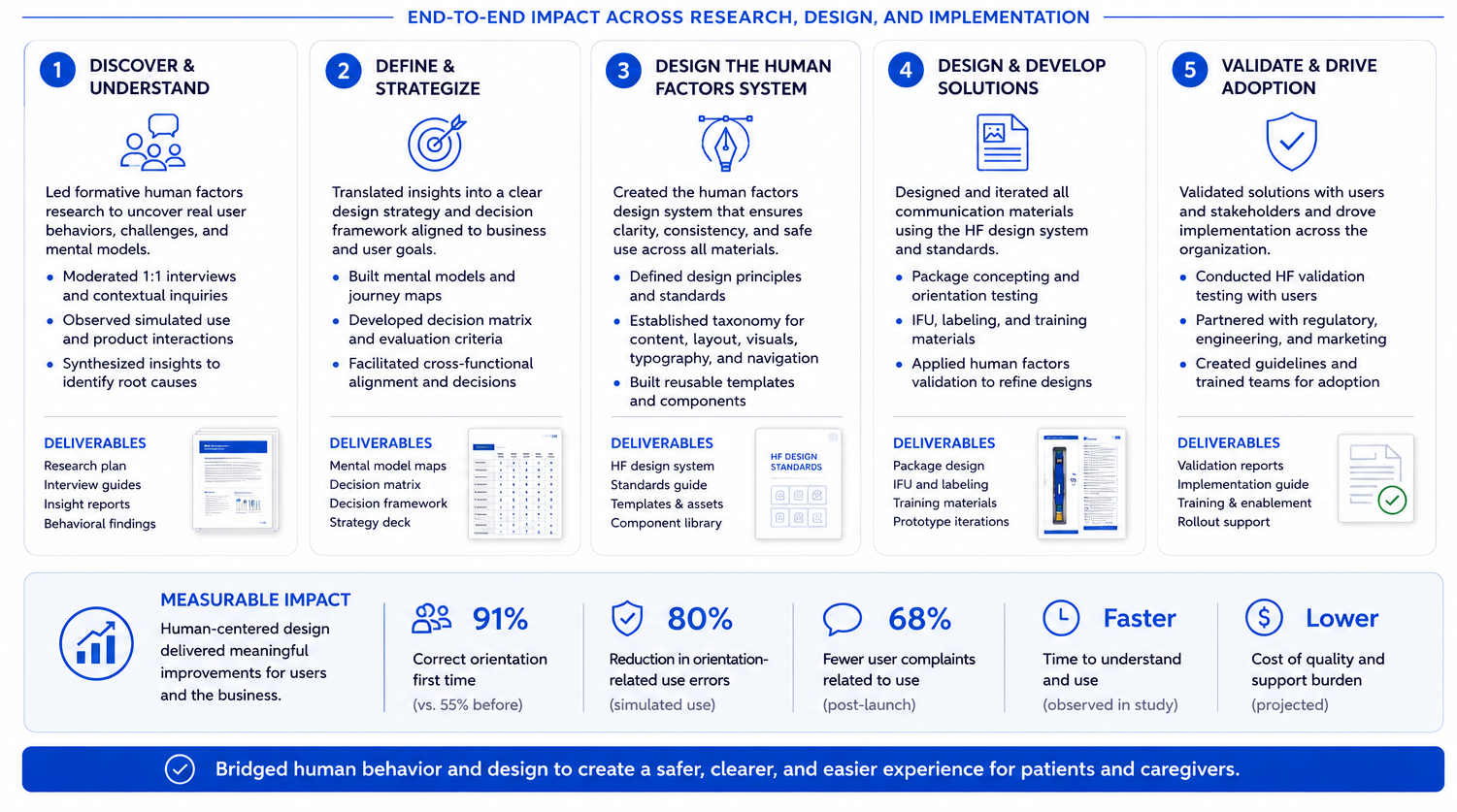
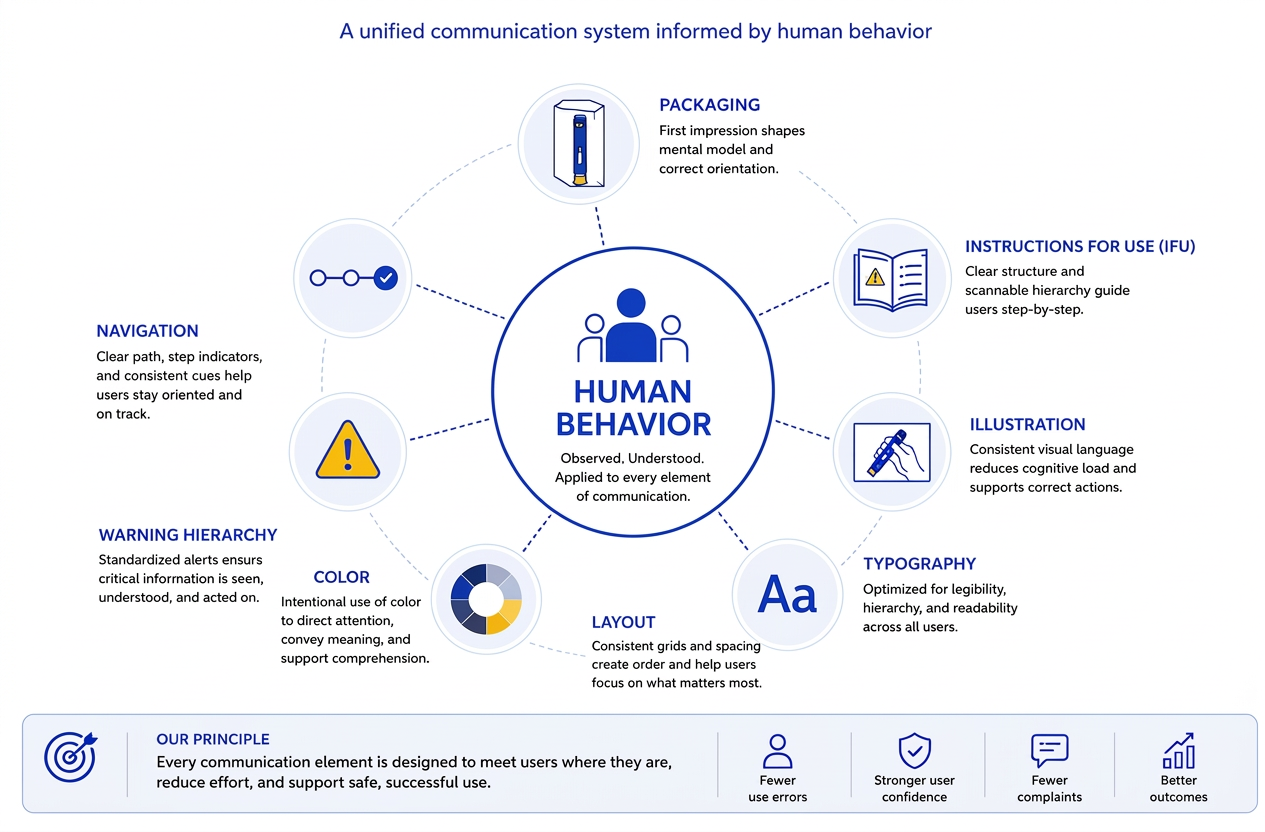
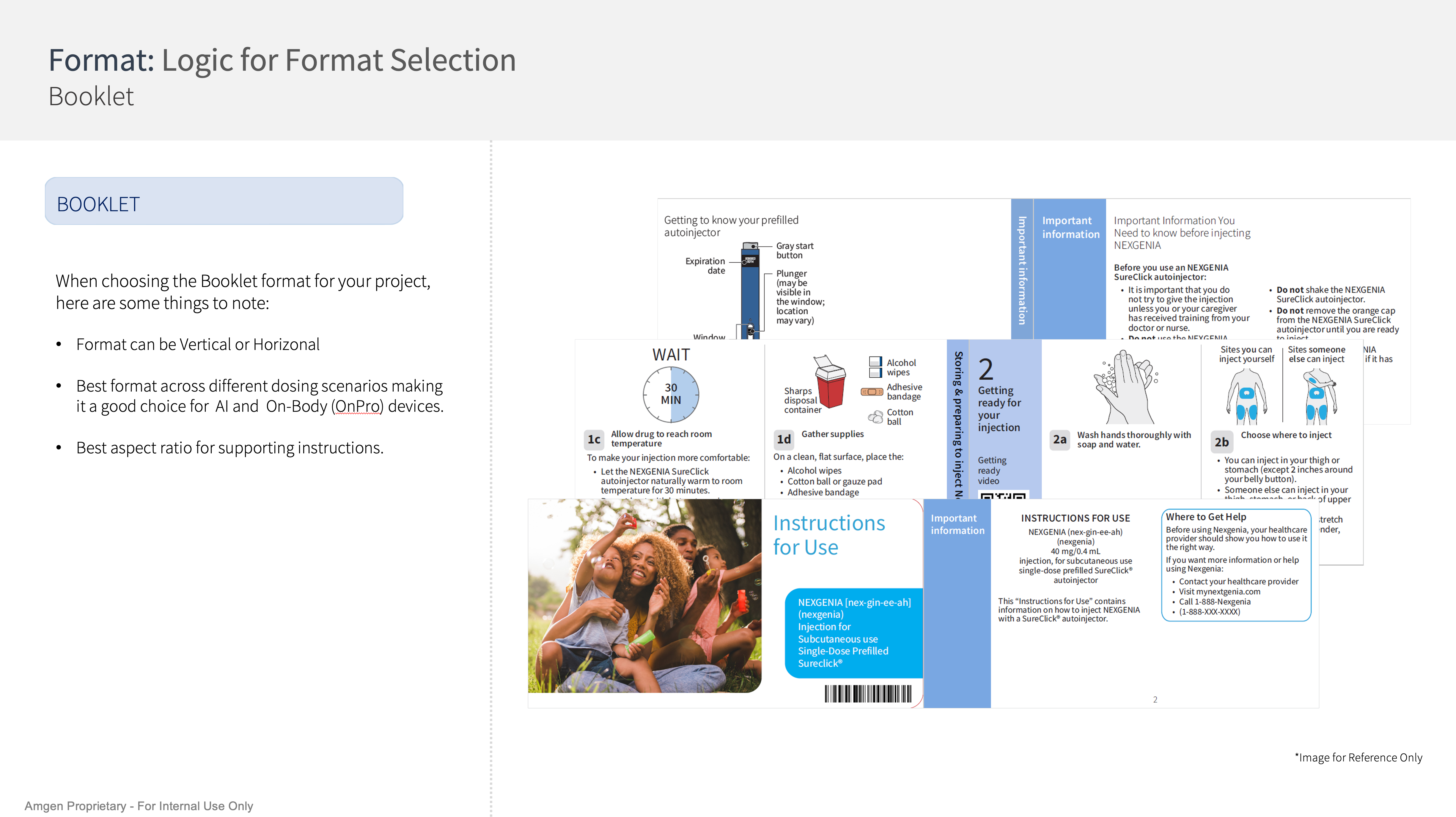
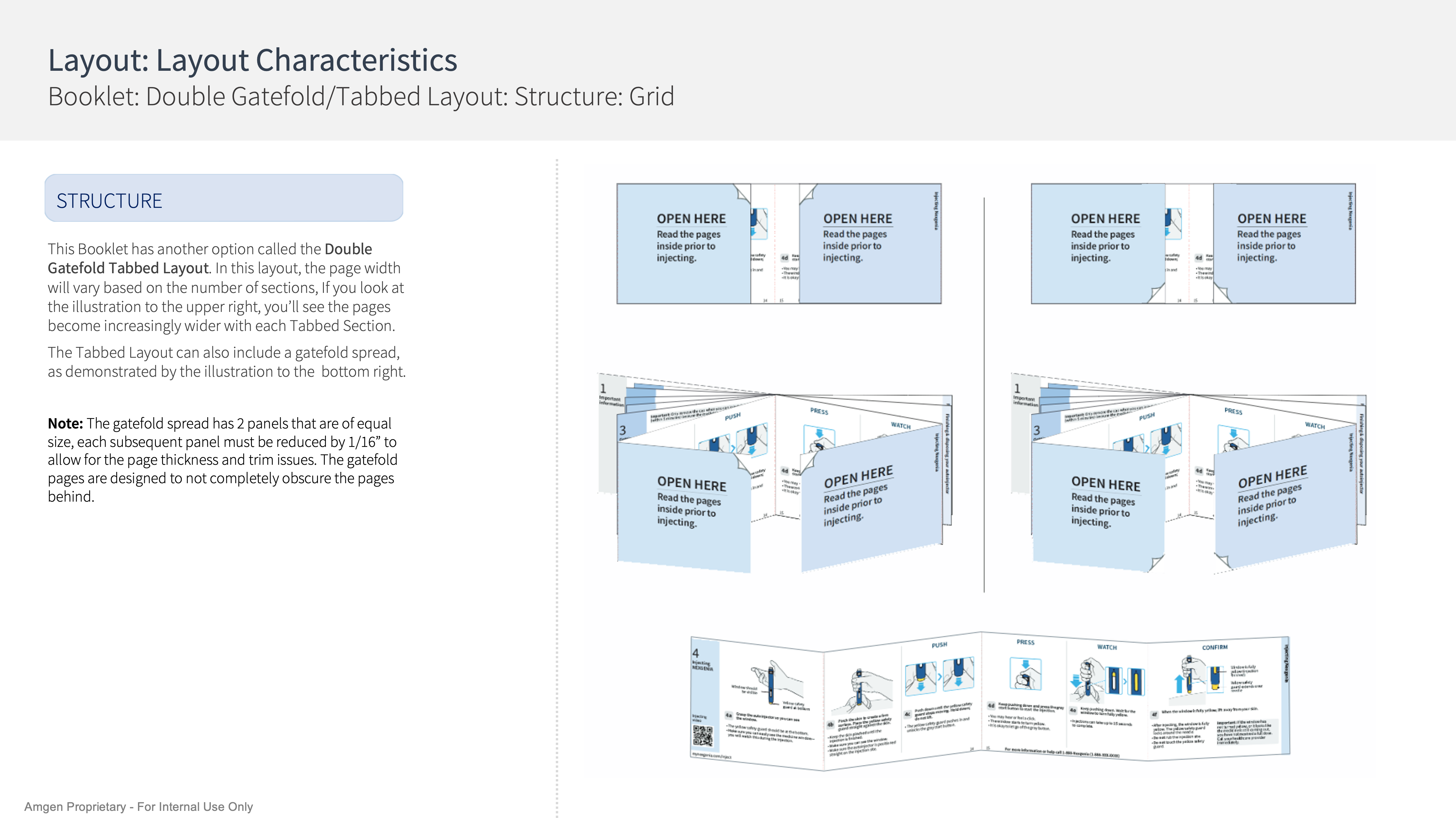
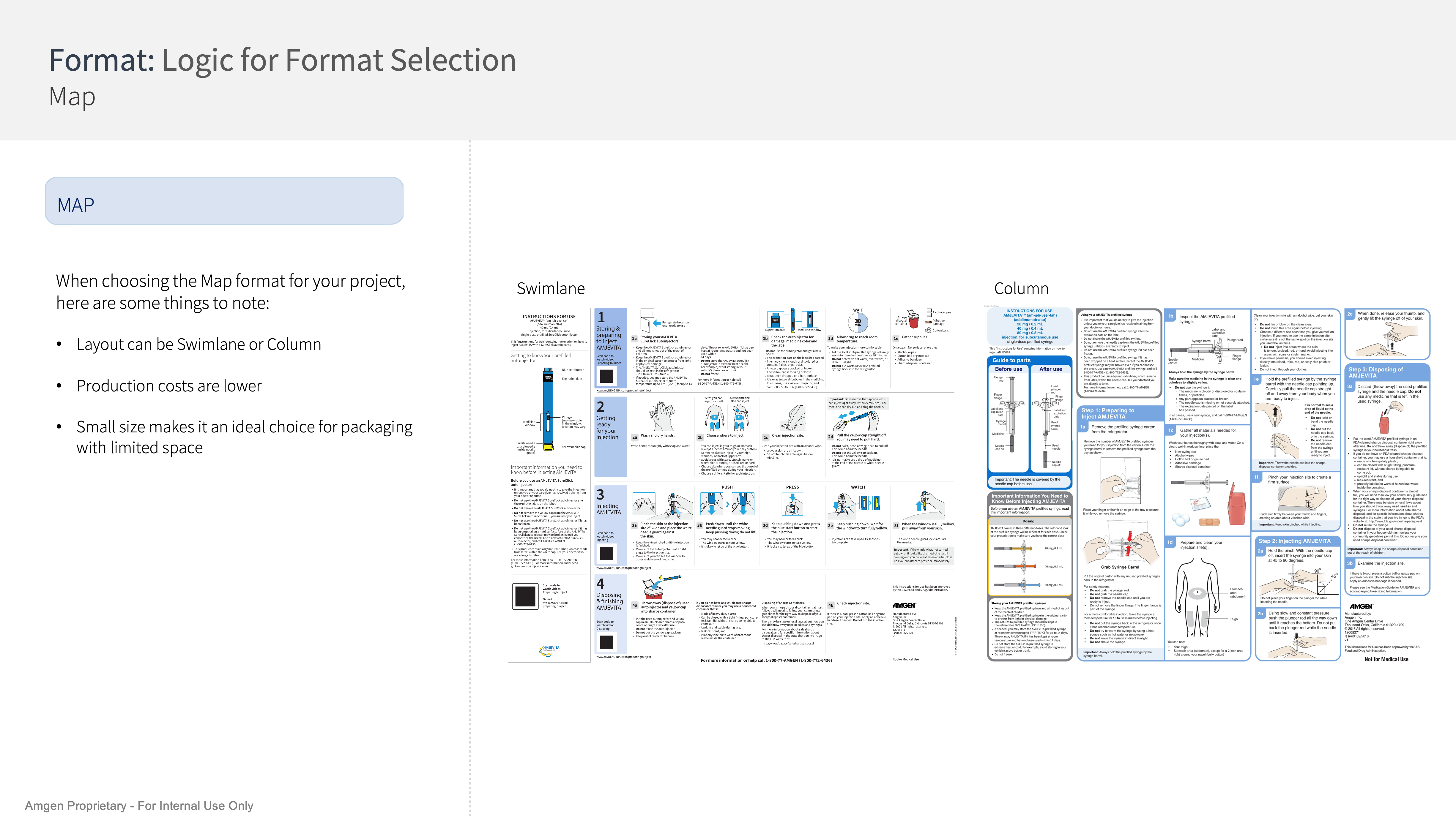
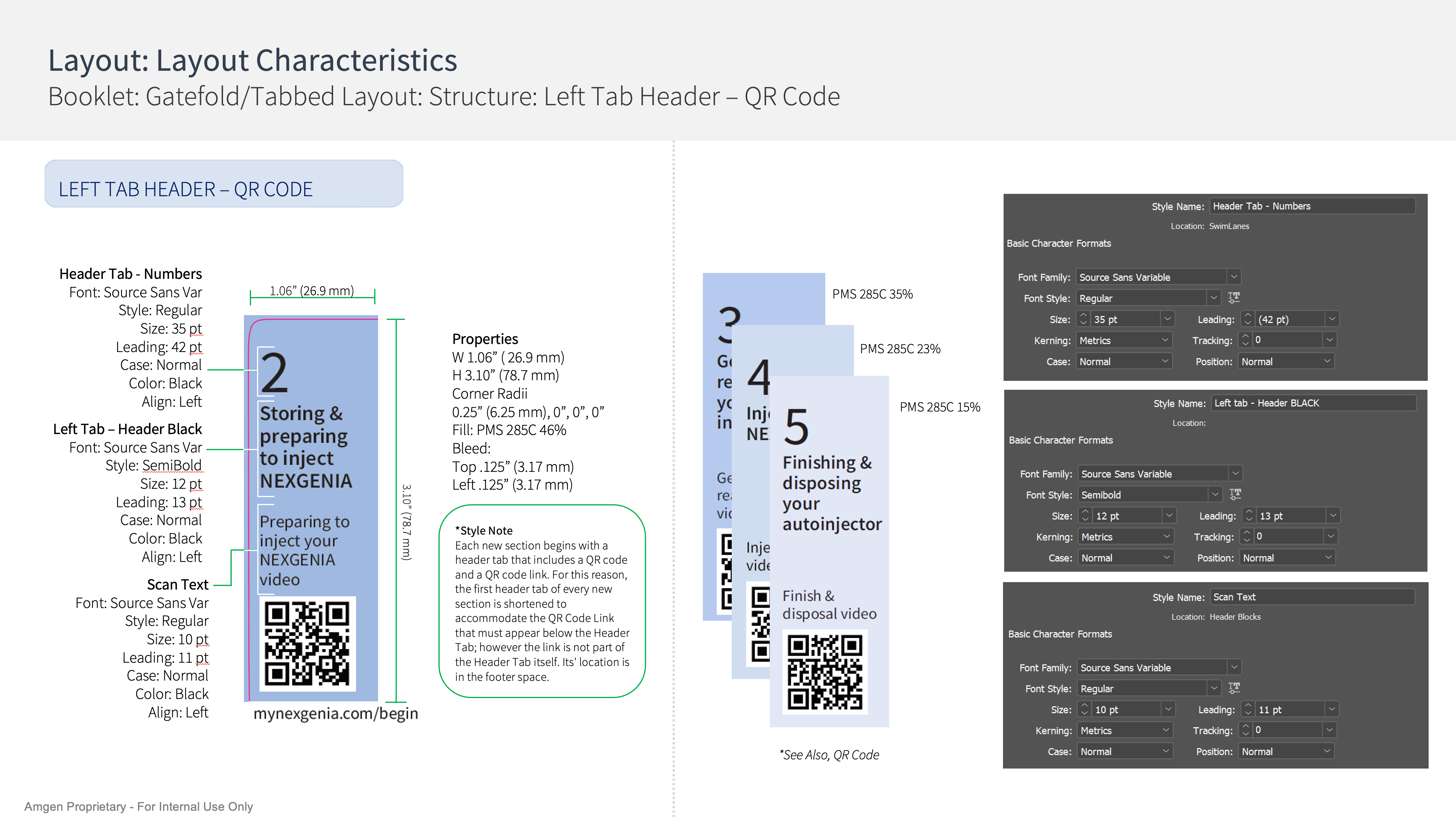
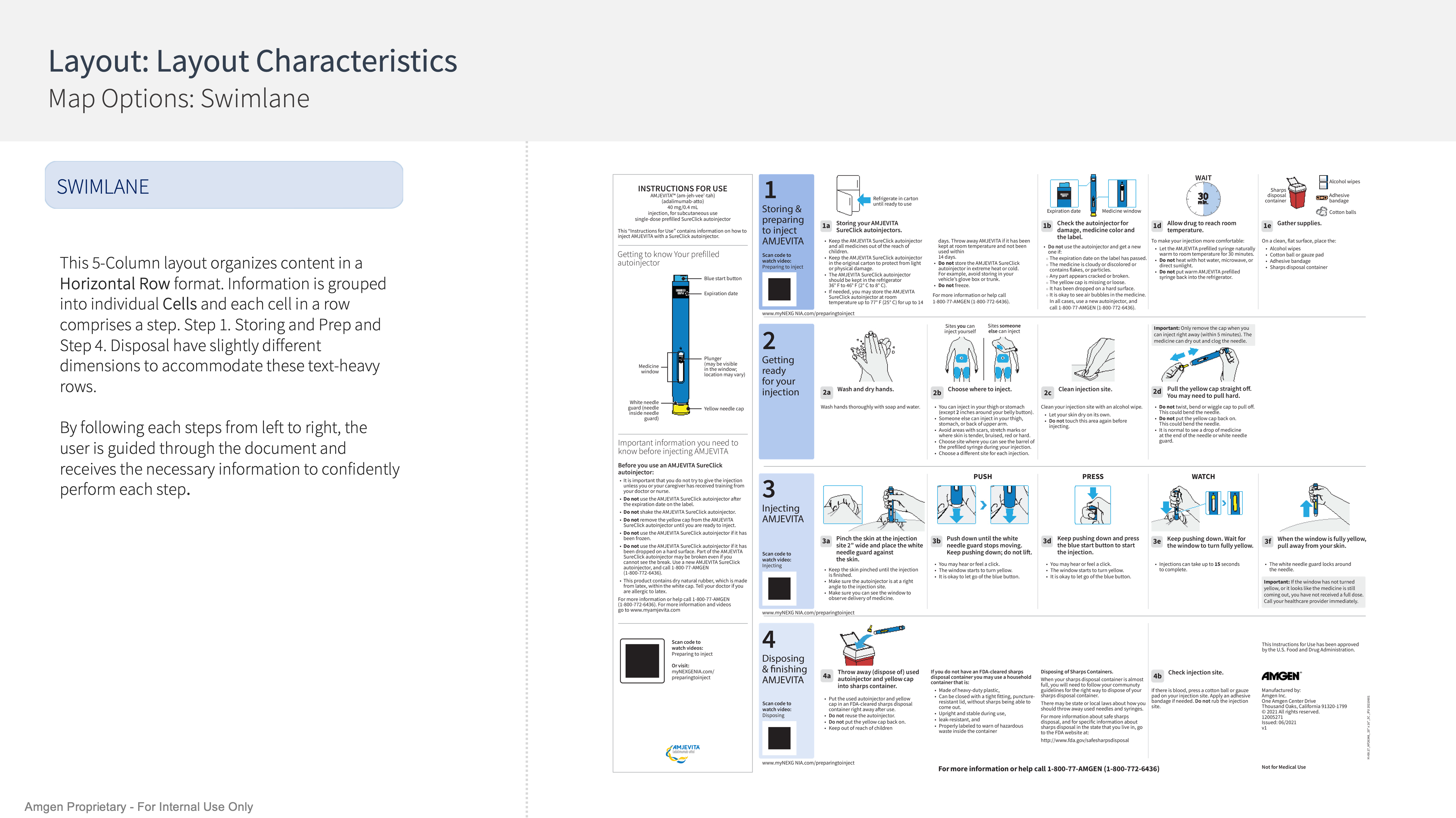
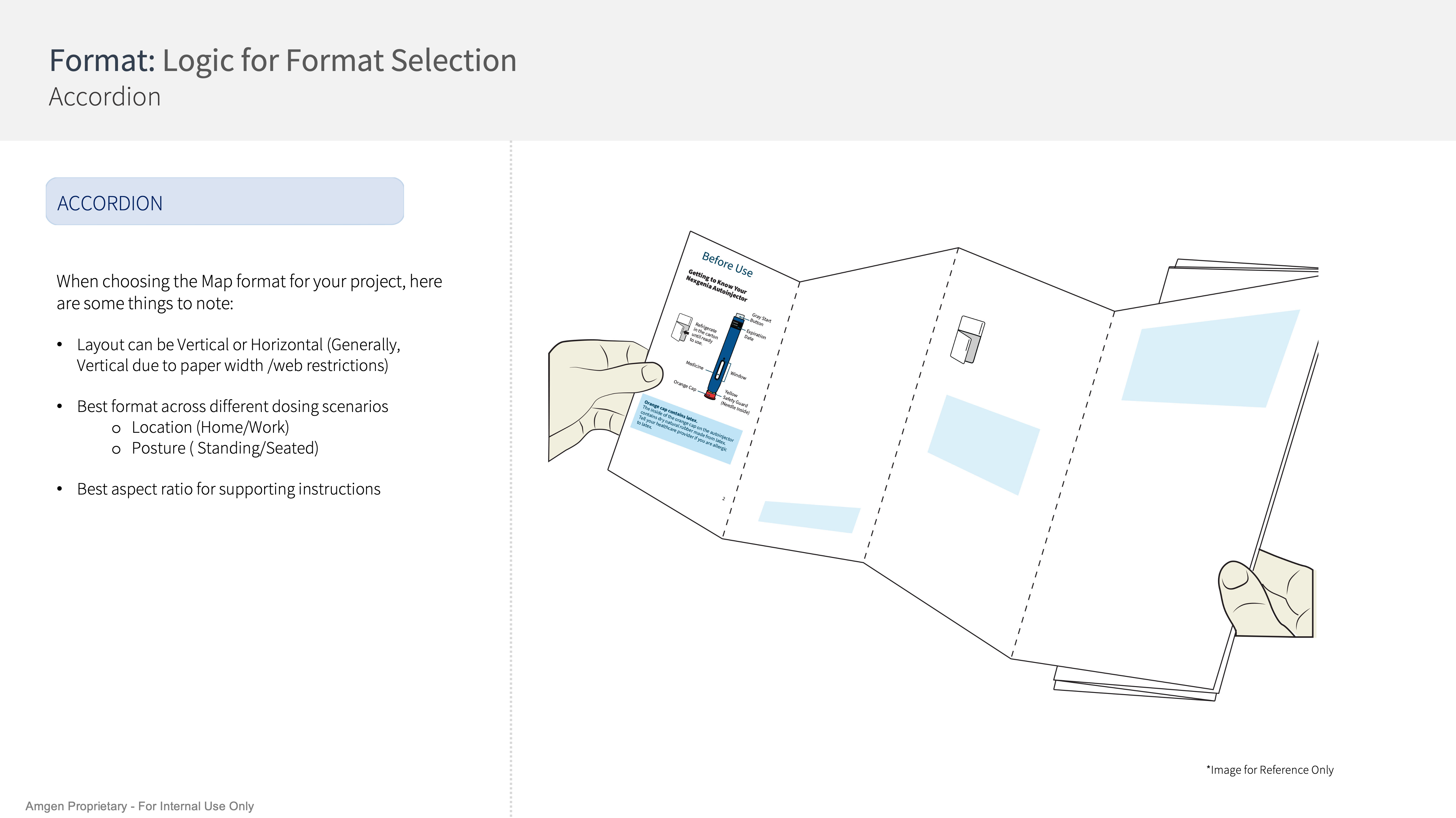
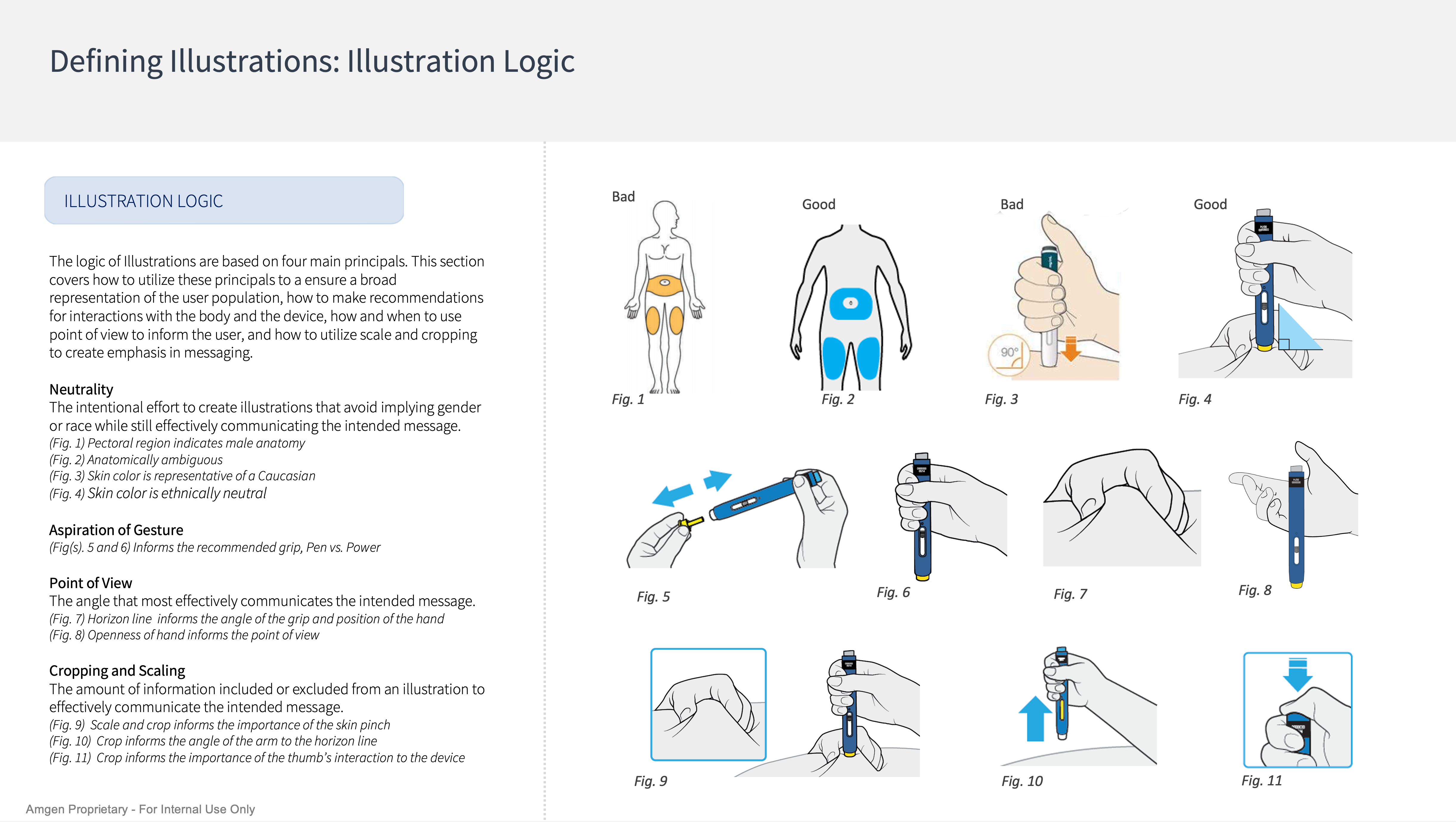
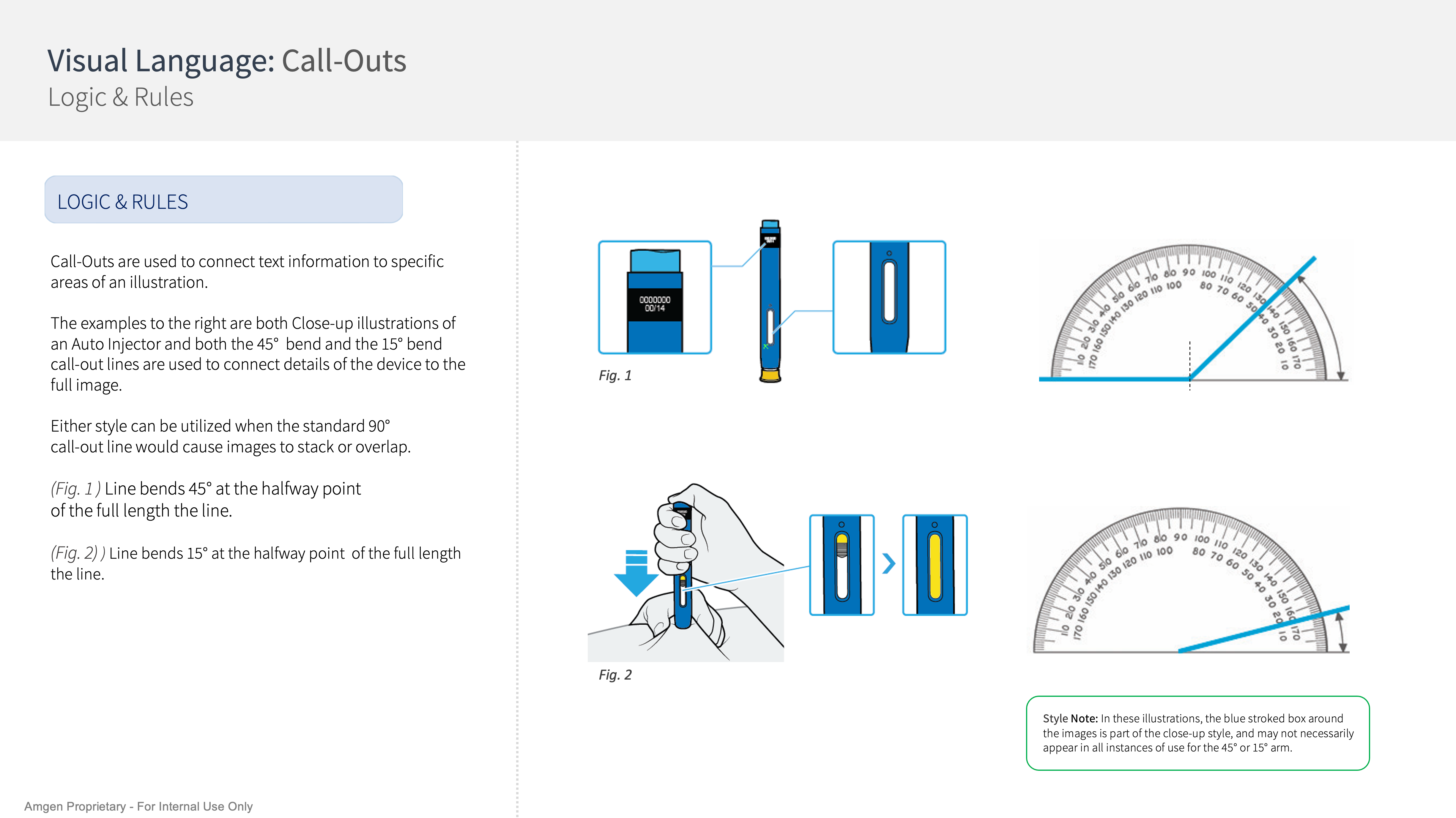
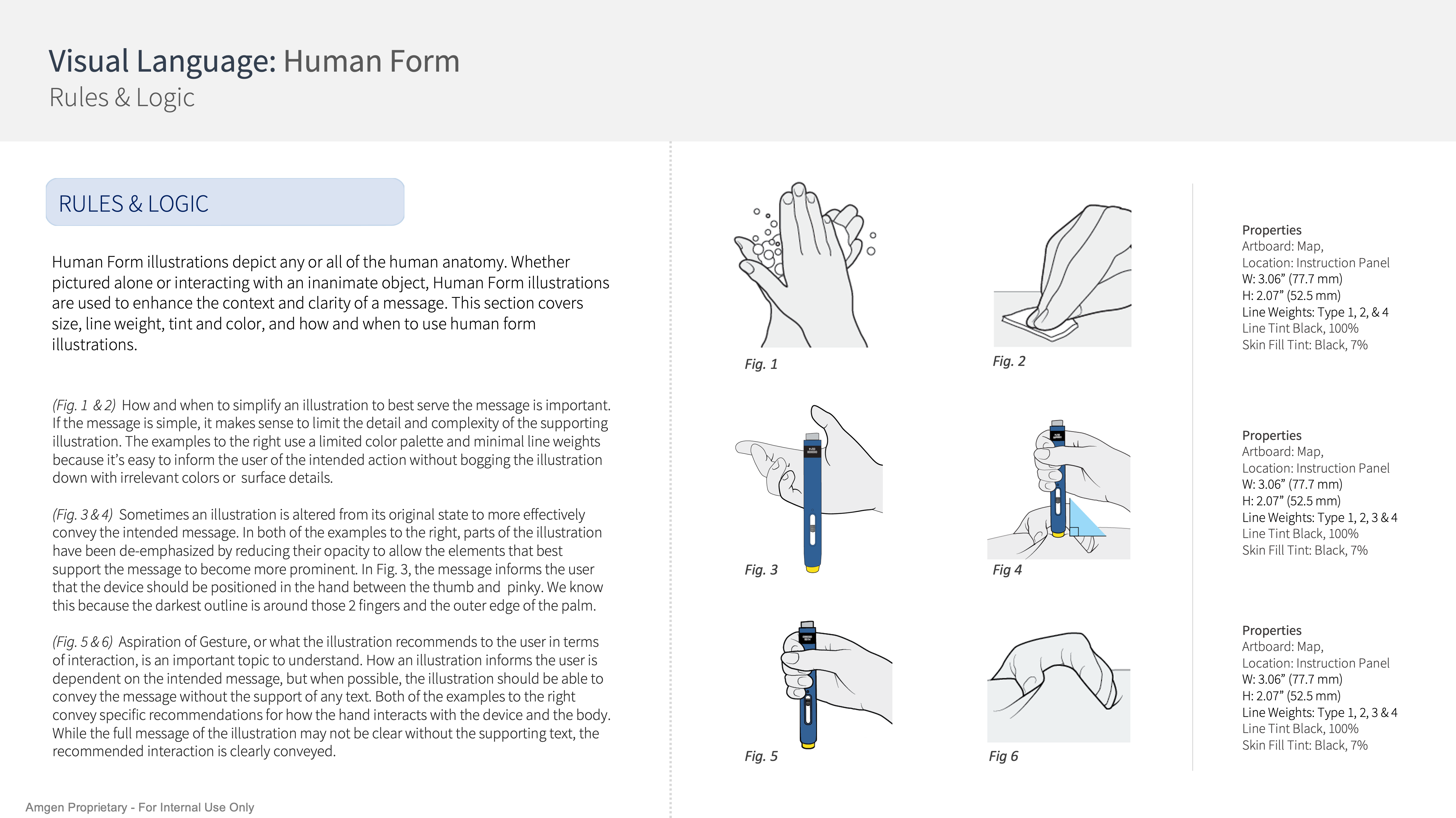
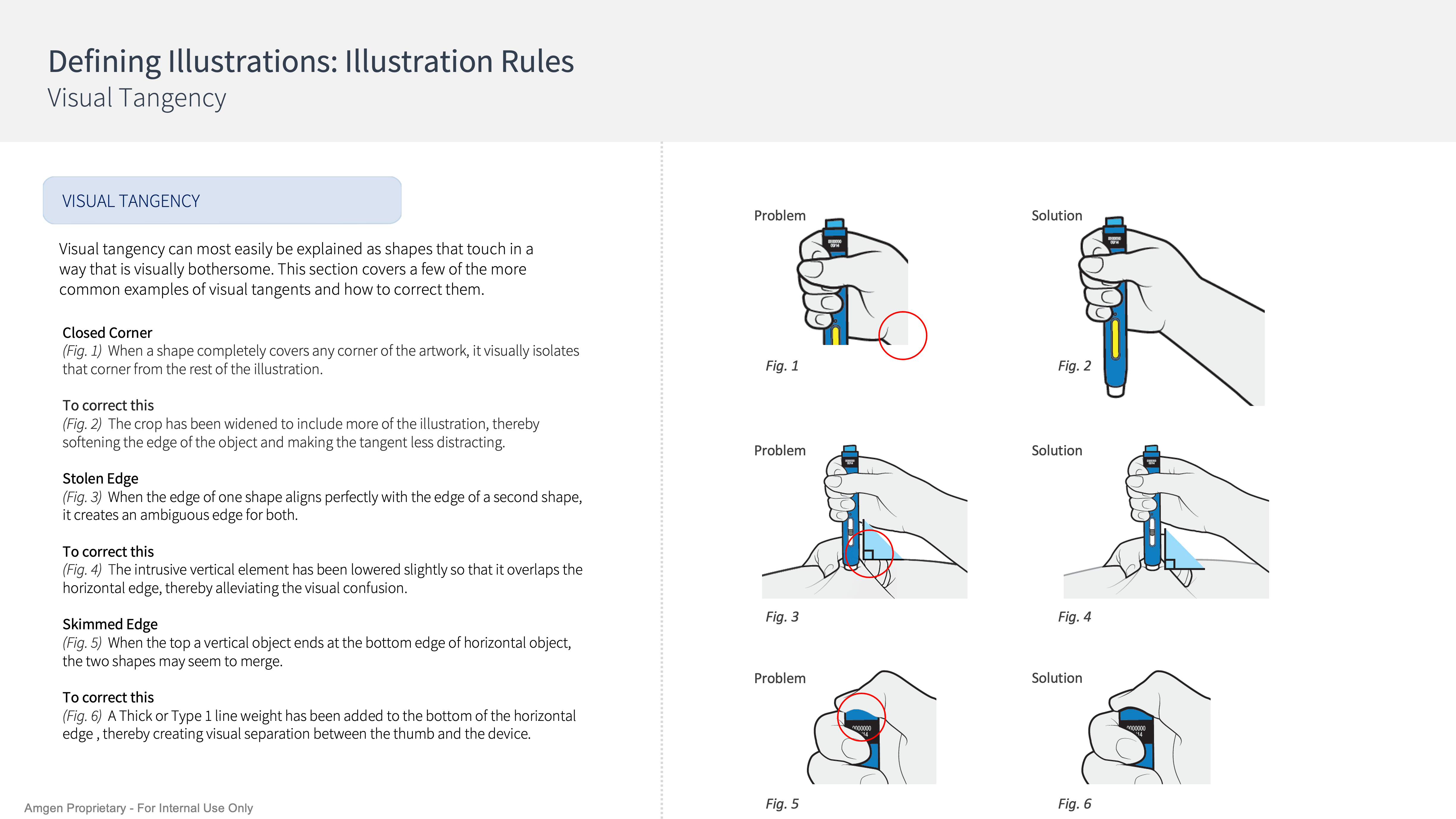
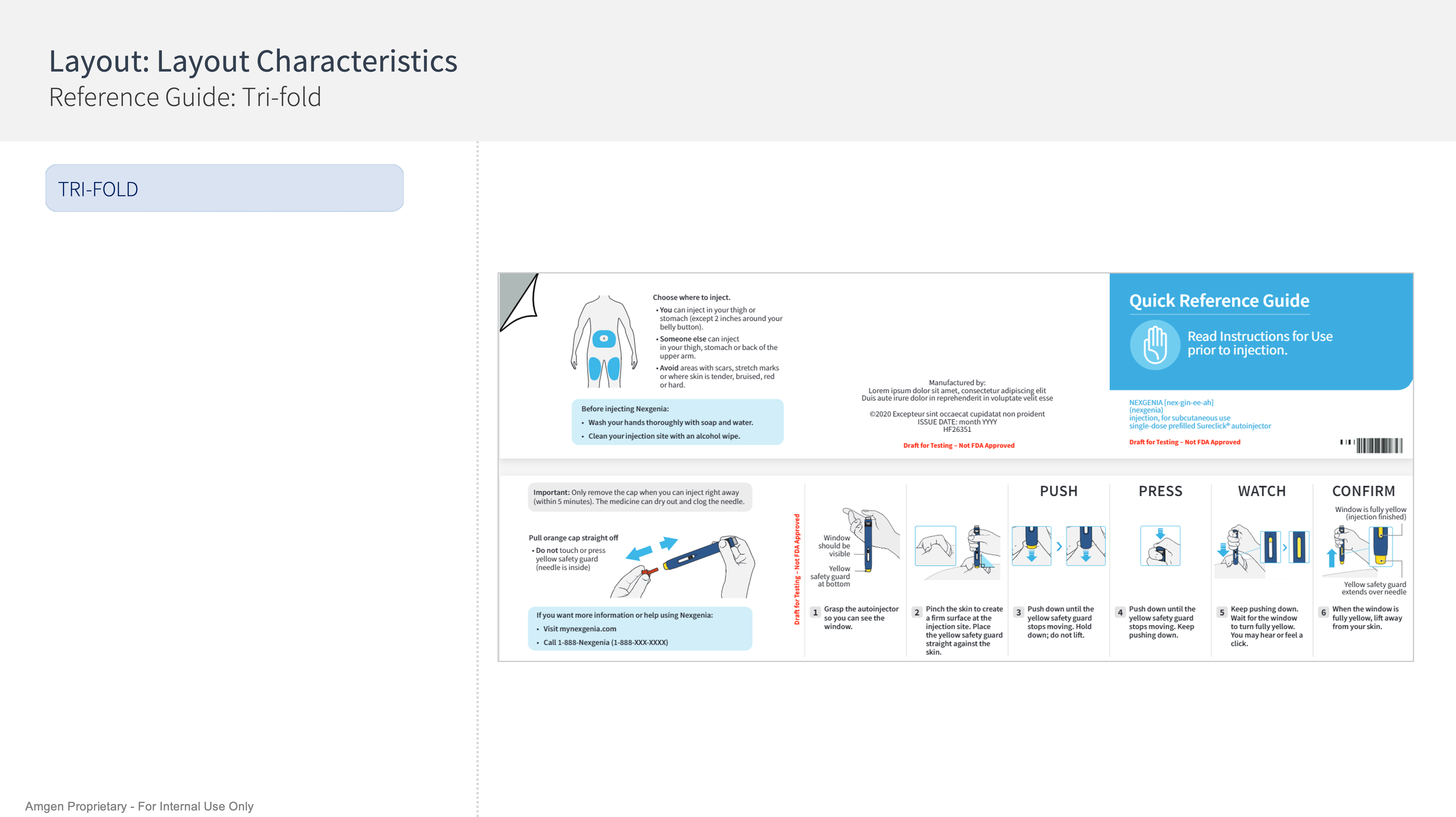
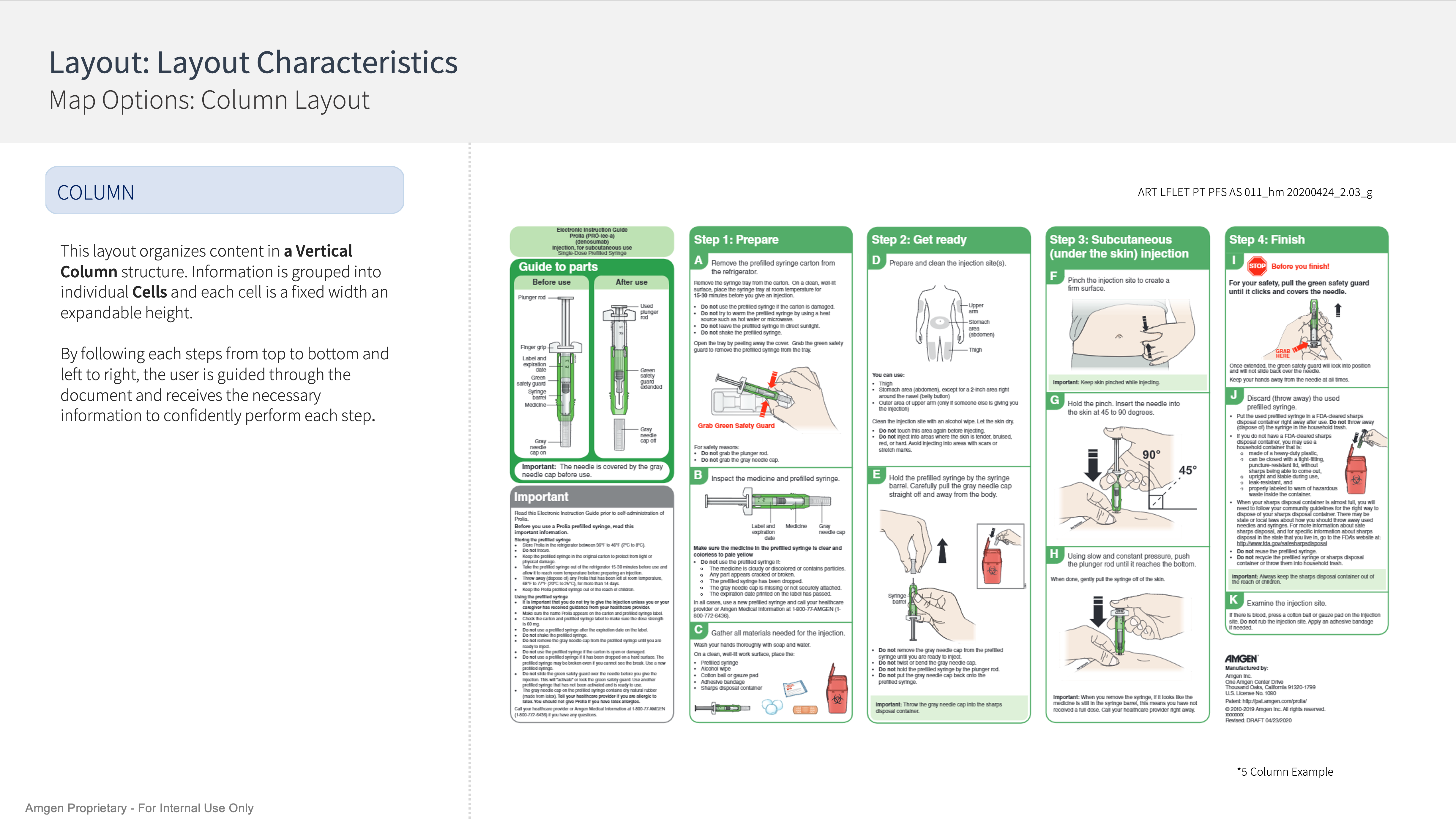
Beyond packaging, the research informed broader Human Factors communication standards governing information hierarchy, typography, illustration, layout, and instructional consistency. The project therefore delivered value beyond a single product improvement by contributing to scalable communication practices.
Measurable Impact
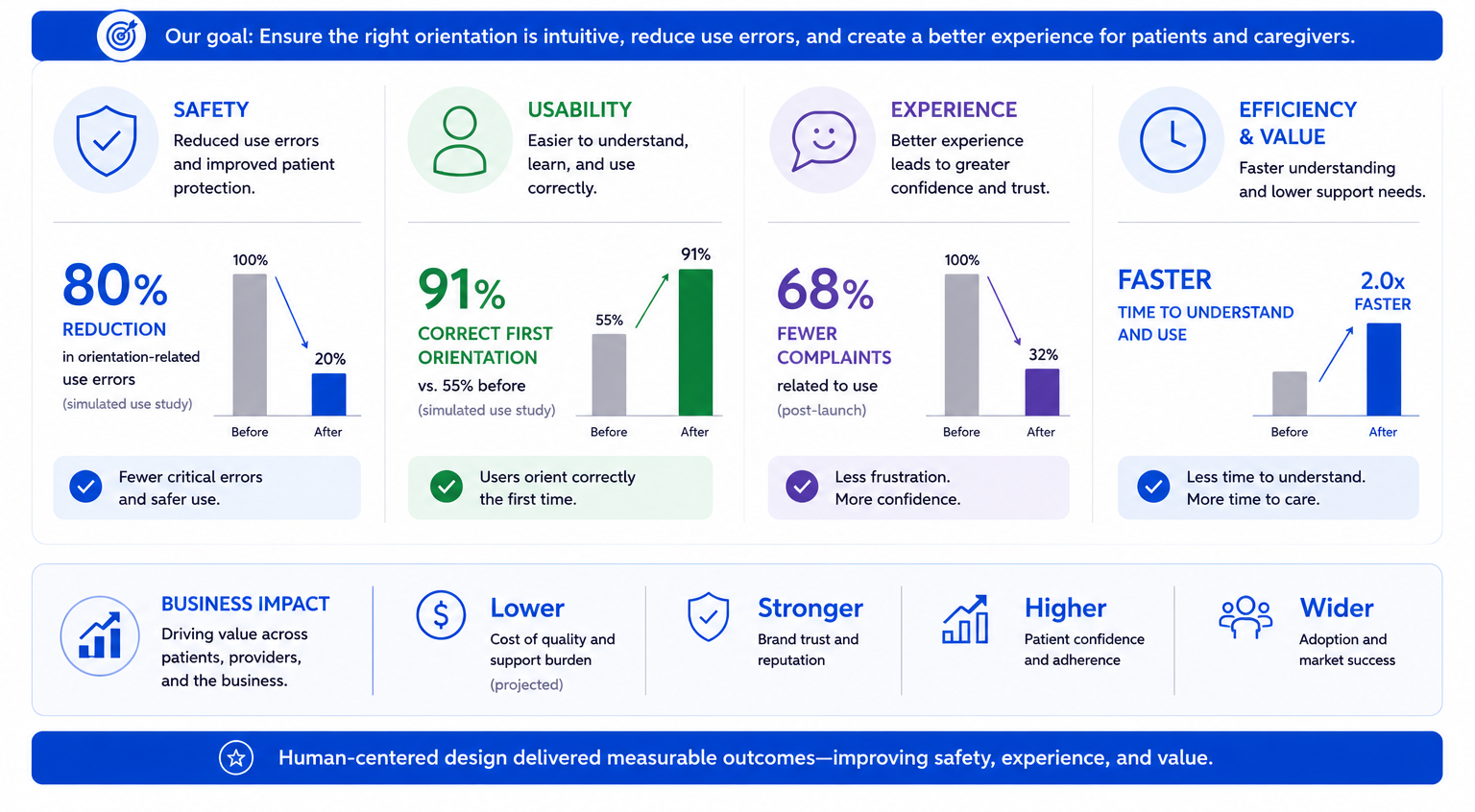
The project demonstrated the value of evidence-based decision making within regulated product development. Rather than pursuing the most technically ambitious solution, the multidisciplinary team implemented the intervention that best balanced patient safety, engineering practicality, business objectives, and regulatory considerations.
The engagement reinforced the role of Human Factors Engineering as a strategic discipline capable of informing product direction, communication standards, and organizational decision making—not simply validating finished designs.
Reflection
This project fundamentally reinforced that effective design begins with understanding behavior before proposing solutions. It strengthened my ability to work across engineering, quality, regulatory affairs, manufacturing, and design while translating complex behavioral evidence into recommendations that multiple disciplines could confidently support.
As a product designer, this experience expanded my perspective beyond interface design toward systems thinking, governance, and strategic decision making. It continues to influence how I frame ambiguous problems, evaluate competing constraints, and advocate for solutions grounded in evidence rather than assumptions.
 Jenn Isbell | Principal Product Designer / Strategist