
Designing the Learning Ecosystem
Designing the digital ecosystem that connected the Student Experience and Teacher Experience—and established the foundation for Scholastic’s future digital curriculum.
Project Context
Explore ELA was Scholastic’s first comprehensive middle school literacy platform. As a greenfield product, the experience, interaction patterns, accessibility standards, and visual language all had to be established from the ground up. My primary responsibility was leading the UX/UI design of the student experience while contributing to onboarding, authentication, and the foundational design system that supported the broader platform.
My Role
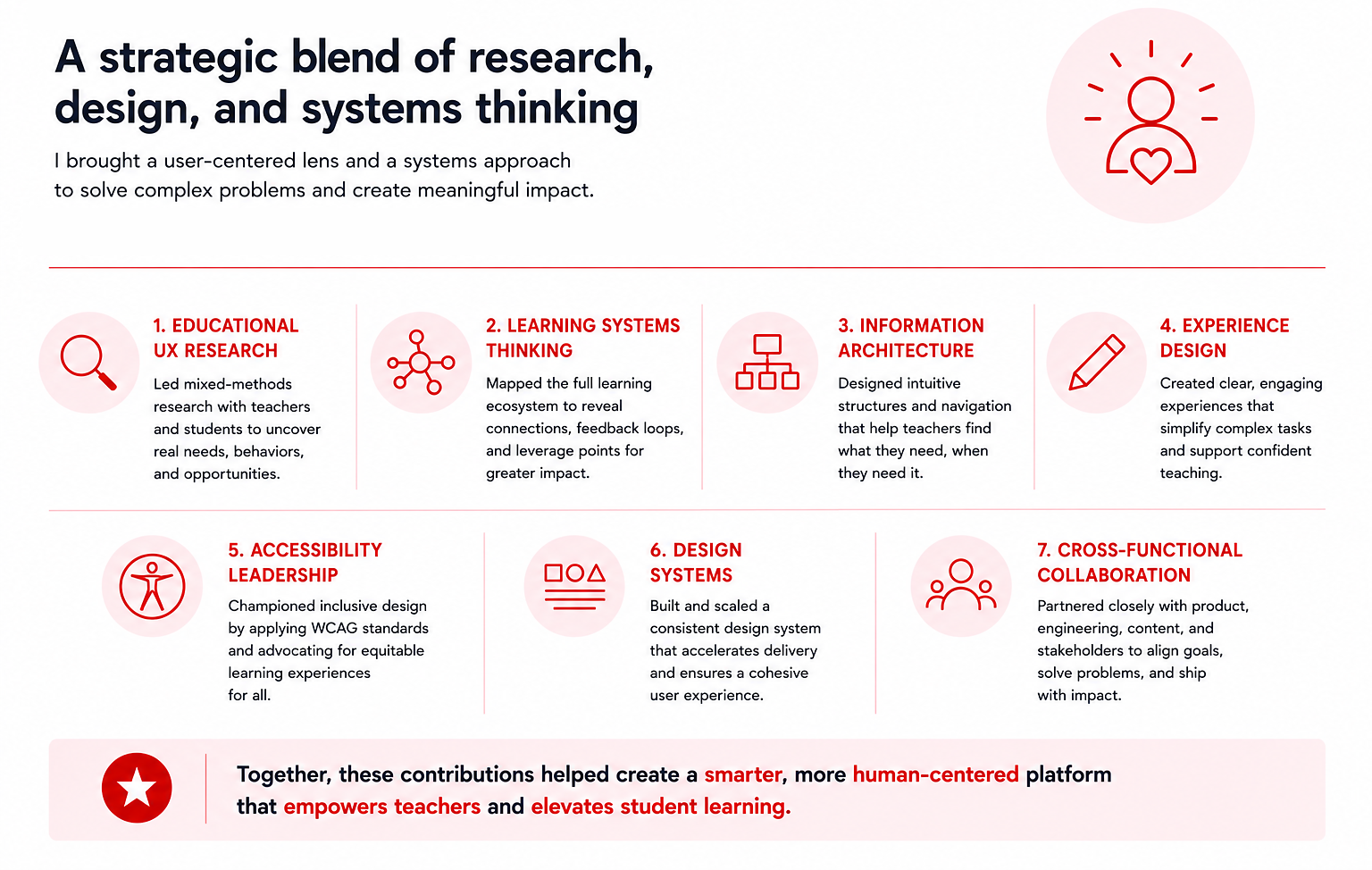
As Senior UX/UI Designer, I brought a user-centered lens to solve complex problems and create meaningful impact through a blend of research, design, and systems thinking. I led the design of the student experience while contributing to authentication, onboarding, and the foundational design system by establishing scalable UX patterns that now support consistency across Scholastic’s middle school curriculum products.
My work included
- Discovery
- Information Architecture
- Interaction Design
- Prototyping
- Accessibility
- Usability
- Validation
- Design Documentation
- Cross-Functional Collaboration
The Problem
The challenge was designing experiences that felt cohesive while serving fundamentally different goals.
The platform needed to support two distinct—but deeply connected—experiences. Students required an engaging, intuitive environment that encouraged reading comprehension and independent learning. Teachers required a much richer ecosystem capable of organizing instruction, monitoring classroom progress, and adapting learning in real time.
What We Discovered
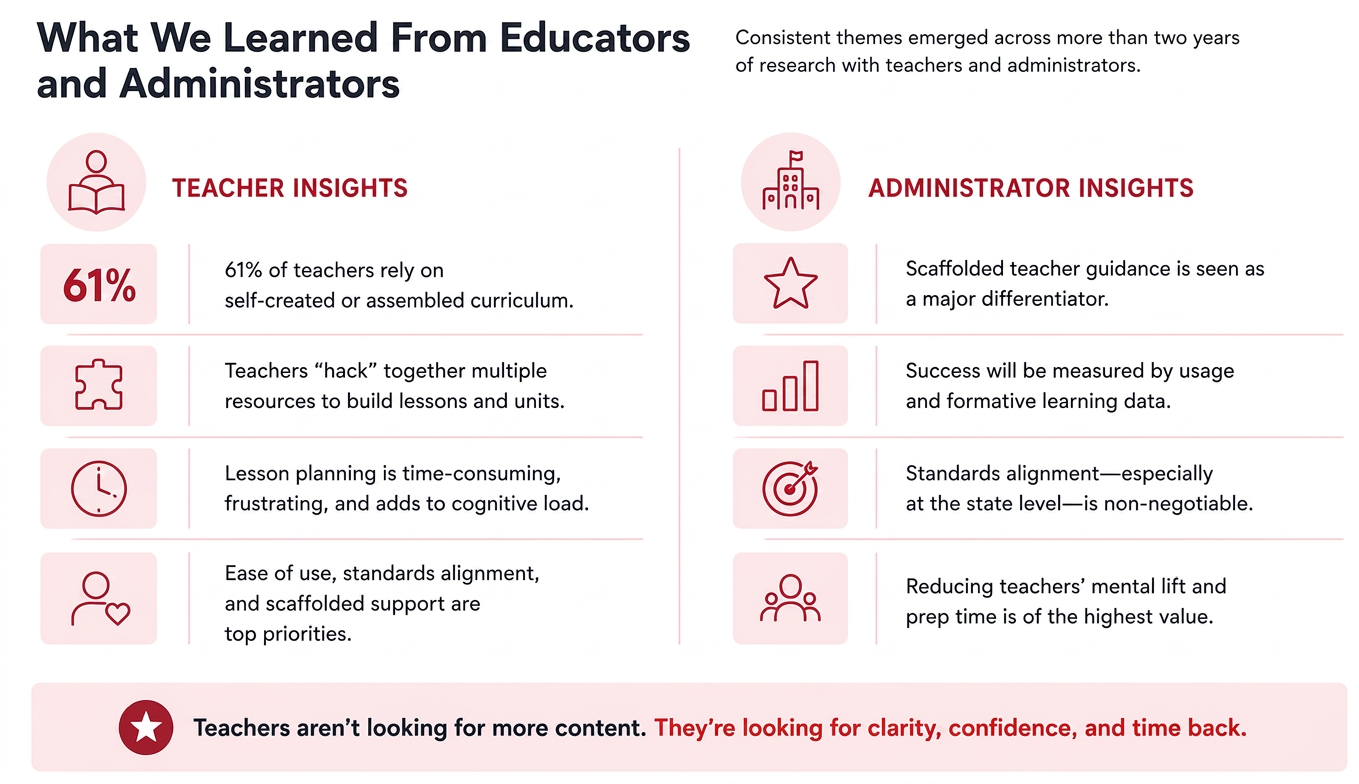
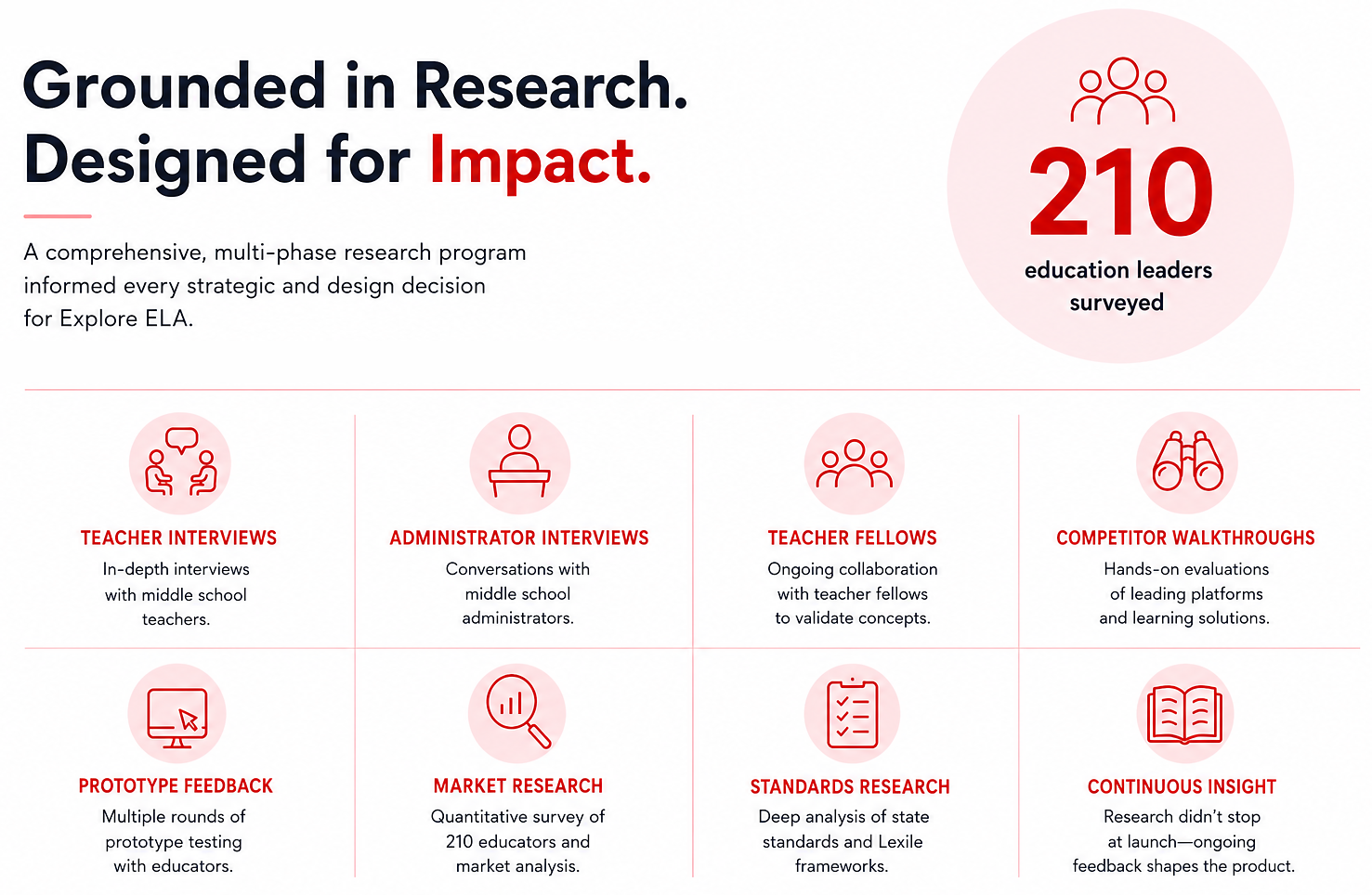
Existing educator research validated our design direction. Teachers consistently struggled with fragmented lesson planning and disconnected resources, while administrators emphasized reducing cognitive load and increasing visibility into student progress.
These insights informed our UX decisions and supported the creation of a connected learning ecosystem.
Reframing the Problem
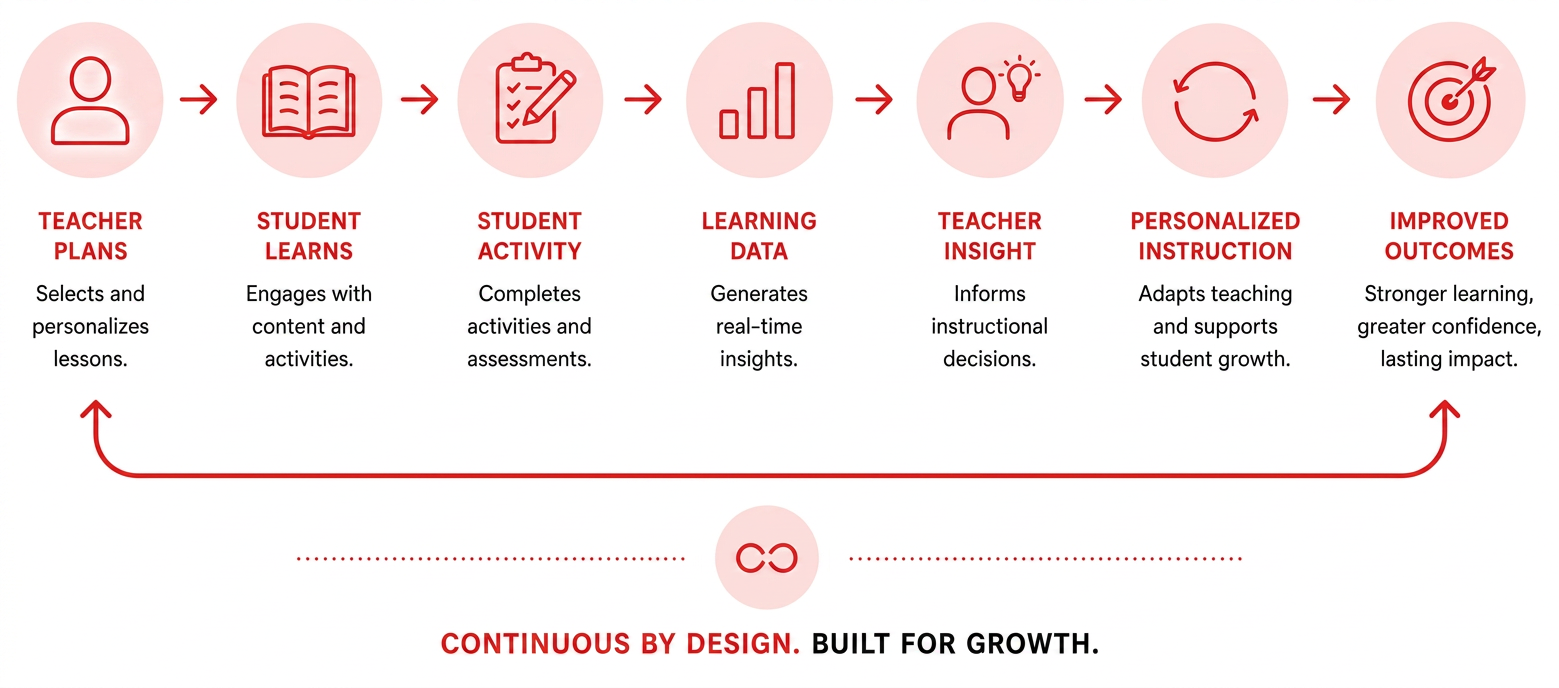
Rather than asking, ‘How might we build another digital curriculum?’ the project evolved into: ‘How might we create one connected learning ecosystem where every student interaction supports meaningful instructional insight?’
The Learning Ecosystem
Every student interaction was intentionally designed to generate meaningful learning data that flowed into the teacher experience. Although my ownership centered on the student platform, every workflow considered how instructional insight would be captured, surfaced, and acted upon across the broader ecosystem.
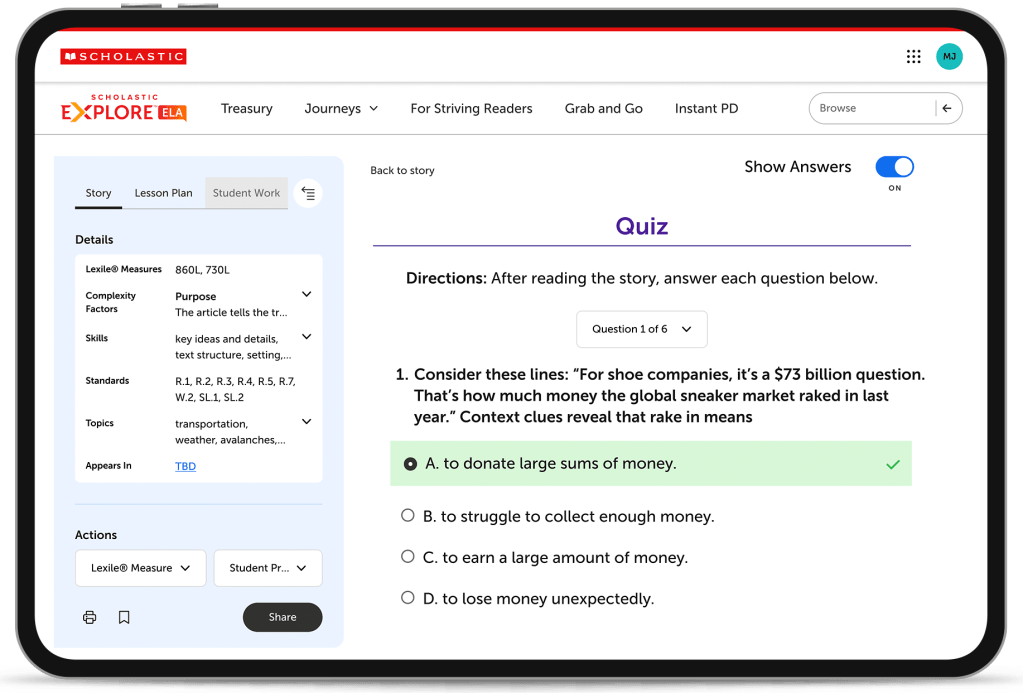
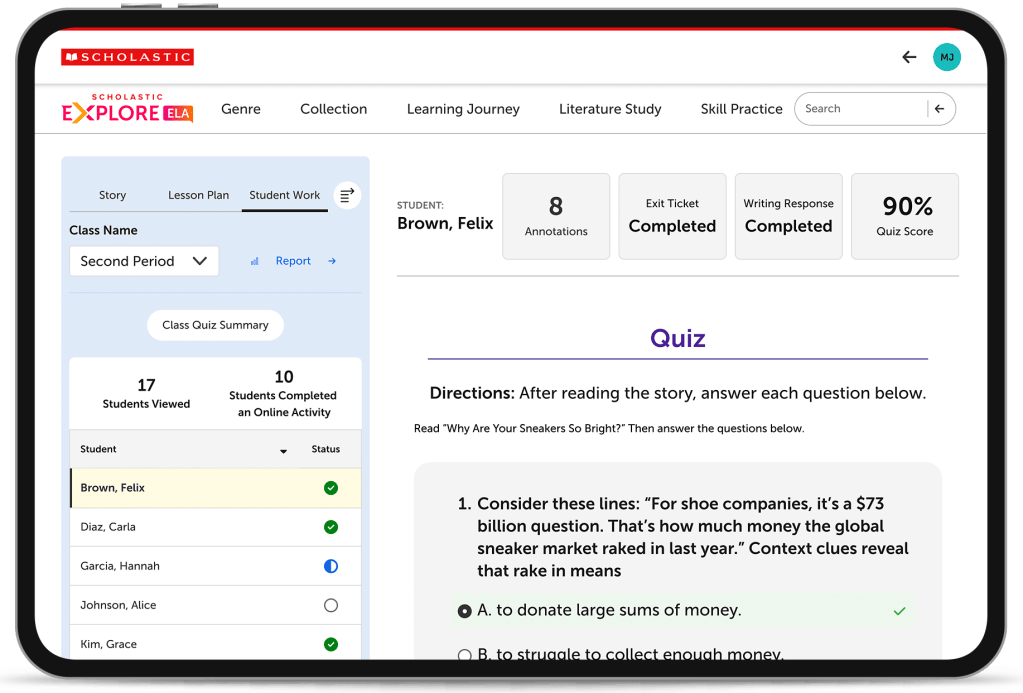
A continuous cycle that connects teaching and learning — so every interaction drives better outcomes.
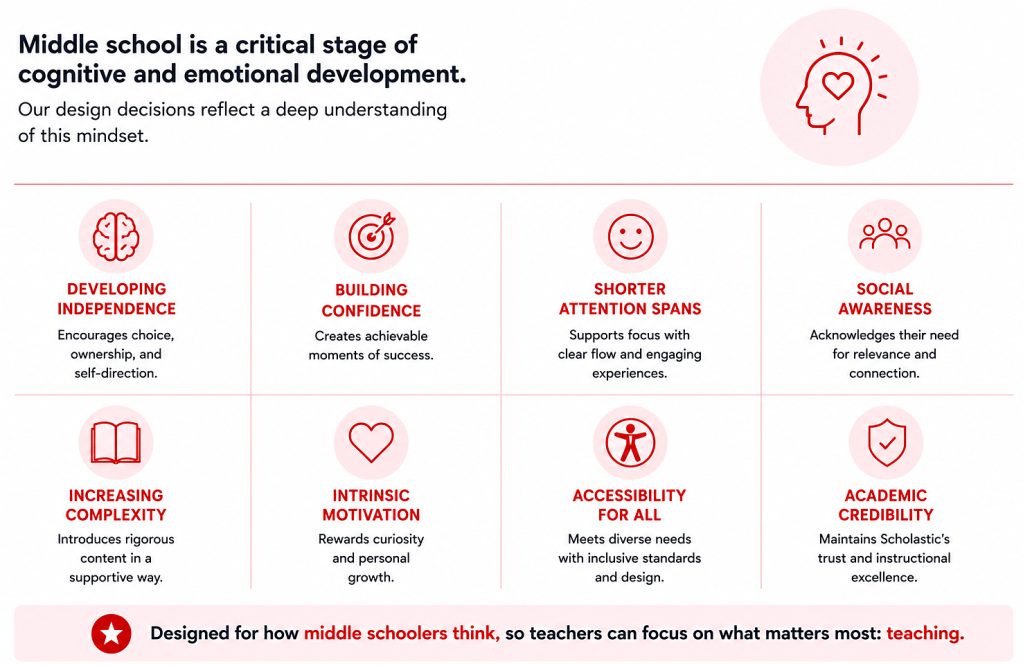
Designing for the Middle School Mind
Middle school learners require a careful balance of engagement, independence, accessibility, and academic credibility. Every interaction—from navigation and typography to activity flow—was designed to reduce cognitive load while encouraging curiosity and confidence.
The Design
The design strategy centered on creating an engaging, age-appropriate digital reading experience that transformed fragmented literacy activities into a cohesive instructional workflow. Rather than treating vocabulary, reading, and comprehension as separate tasks, the experience guided students through a structured learning journey that supported reading readiness, active engagement, and knowledge retention. The interface was intentionally designed to reduce cognitive load, encourage exploration, and provide teachers with a seamless instructional tool that integrated naturally into classroom workflows while generating meaningful insights into student comprehension.
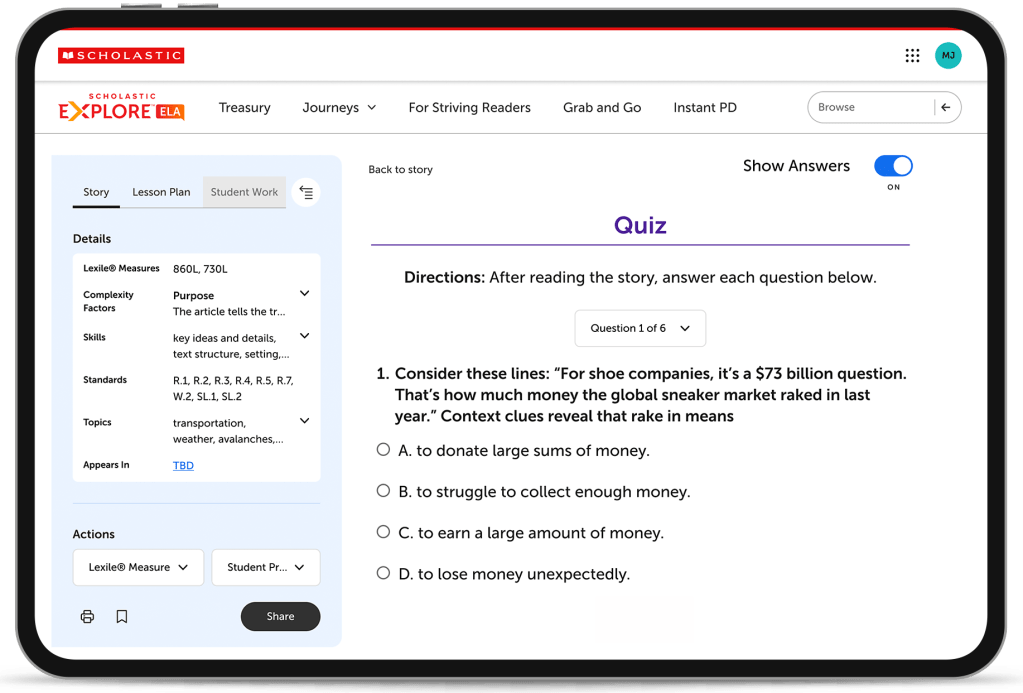
The experience was organized into Before Reading and After Reading activities that supported the natural progression of literacy instruction.
Before Reading activities introduced key vocabulary, activated prior knowledge, and encouraged students to anticipate story themes before engaging with the text.
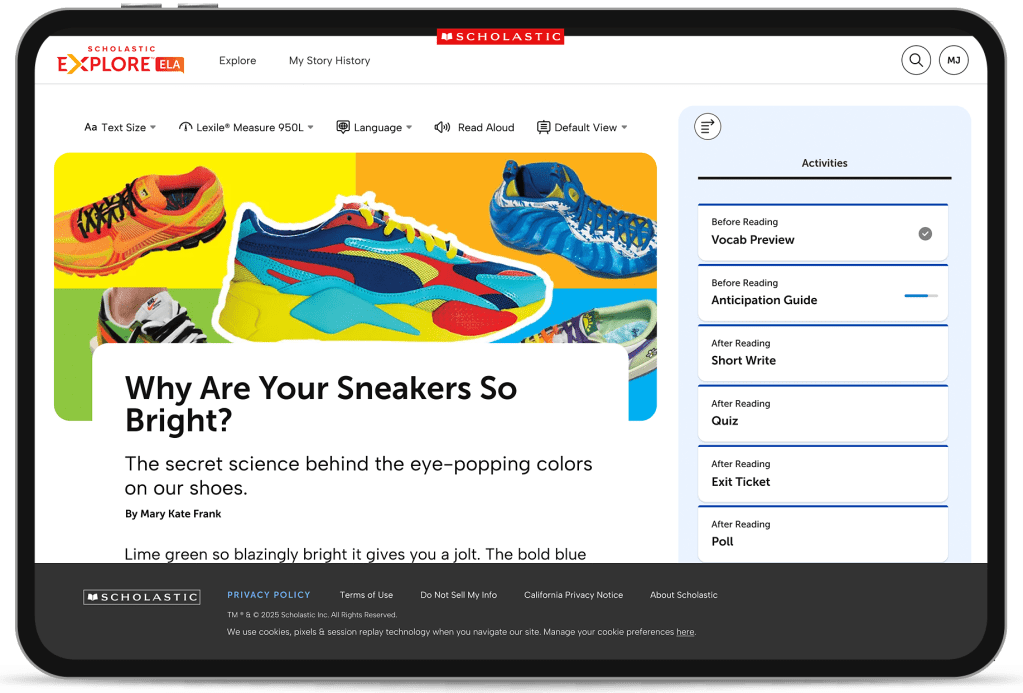
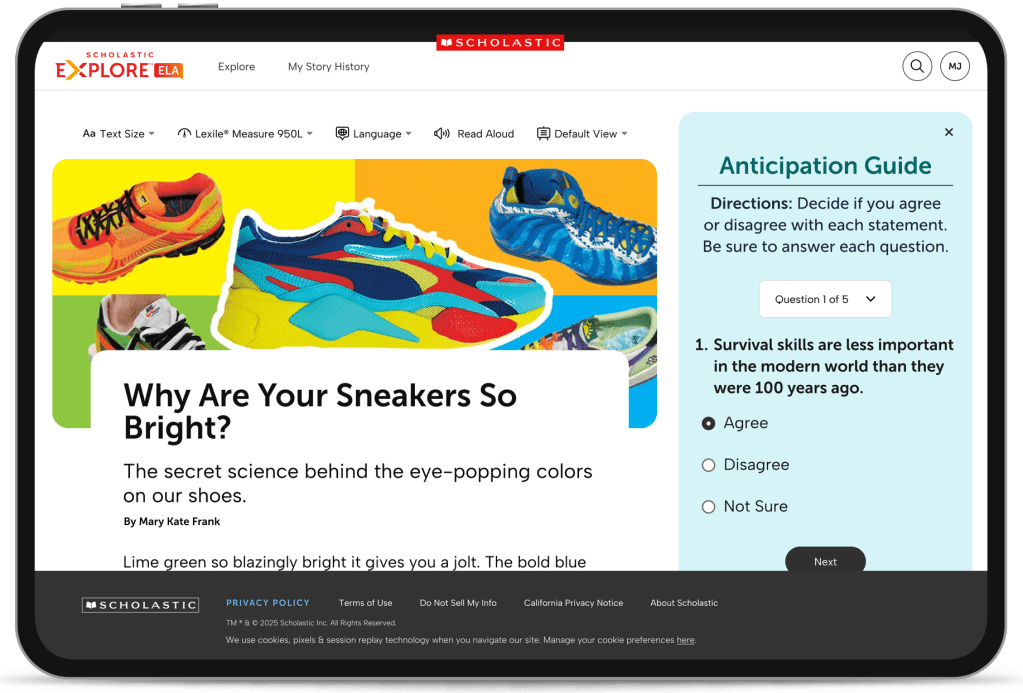
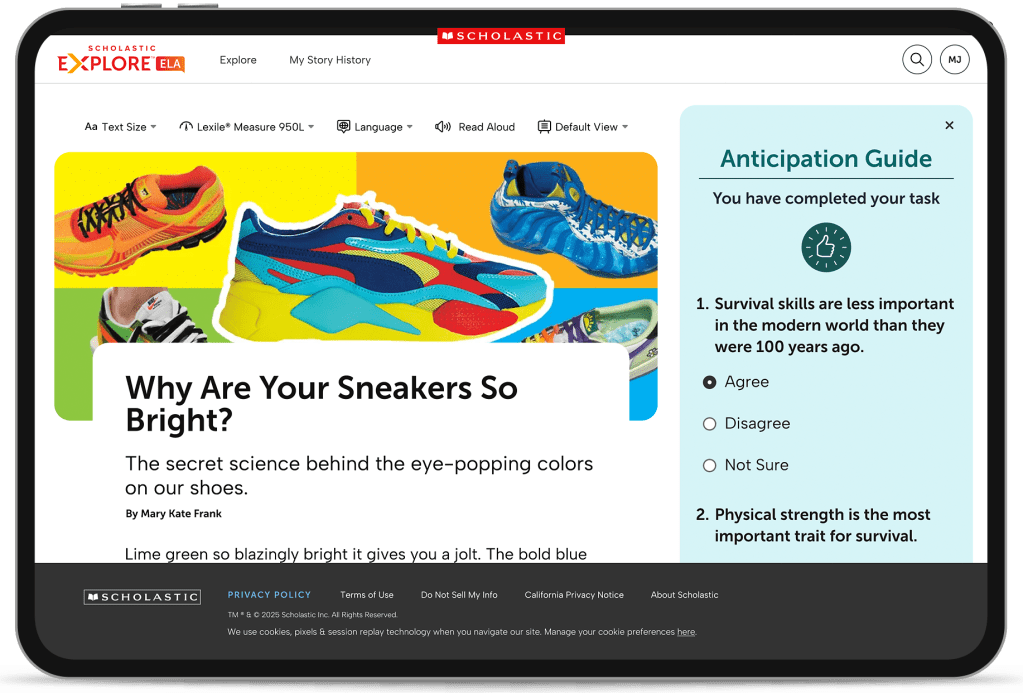
After Reading activities reinforced comprehension through interactive quizzes, vocabulary review, sequencing exercises, critical thinking prompts, and reflection activities that measured understanding beyond simple recall. Together, these experiences enabled teachers to assess comprehension at multiple points throughout the learning process, identify areas where students required additional support, and improve instructional outcomes through engaging, standards-aligned digital activities.
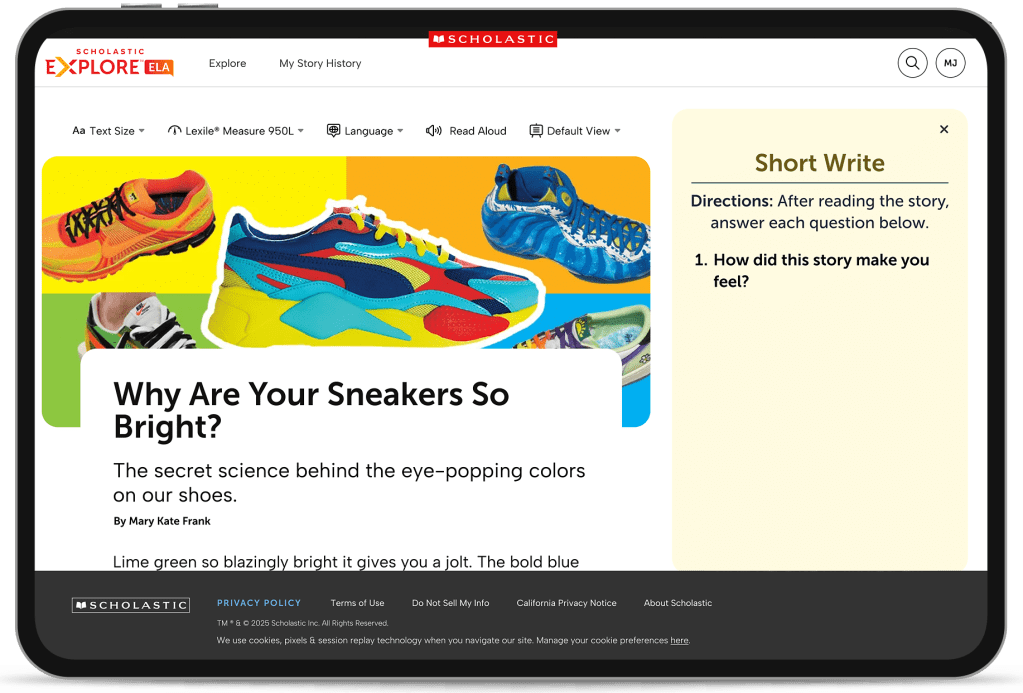
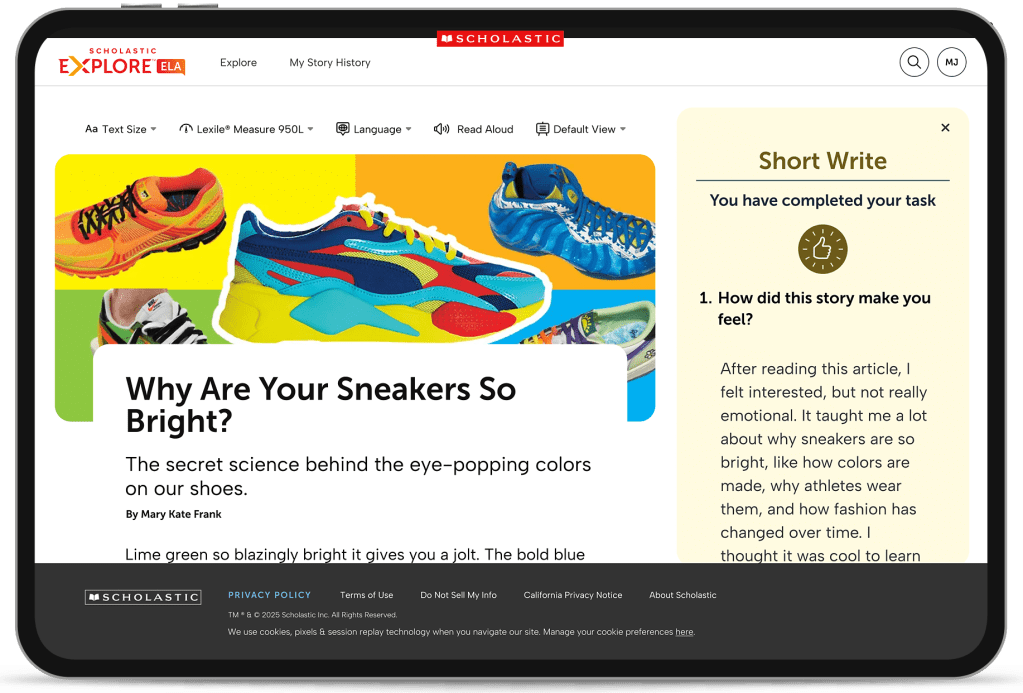
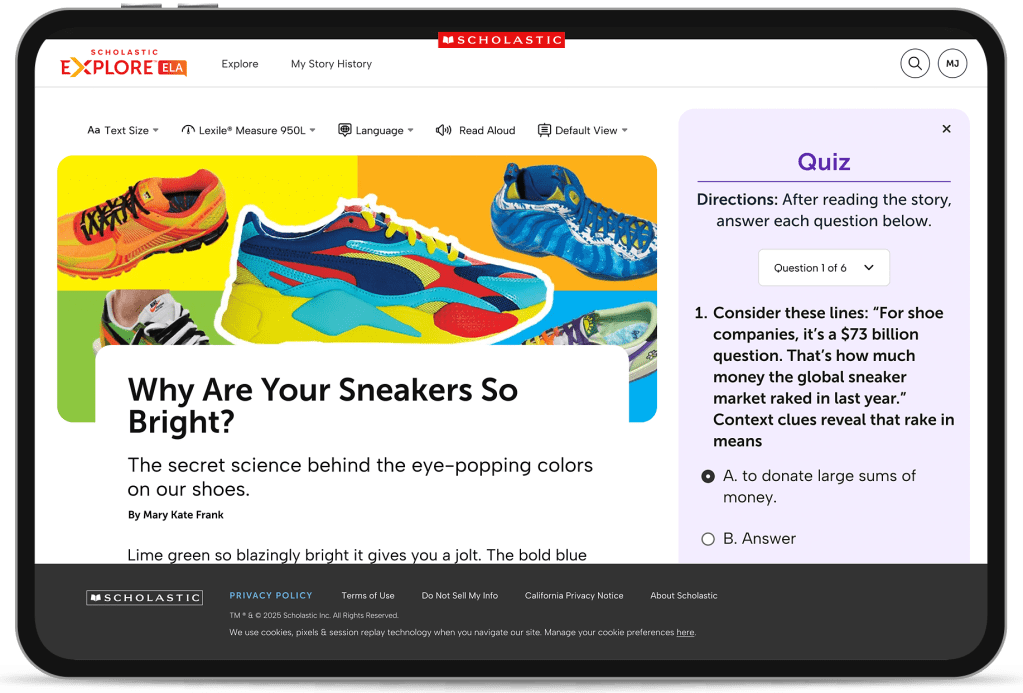
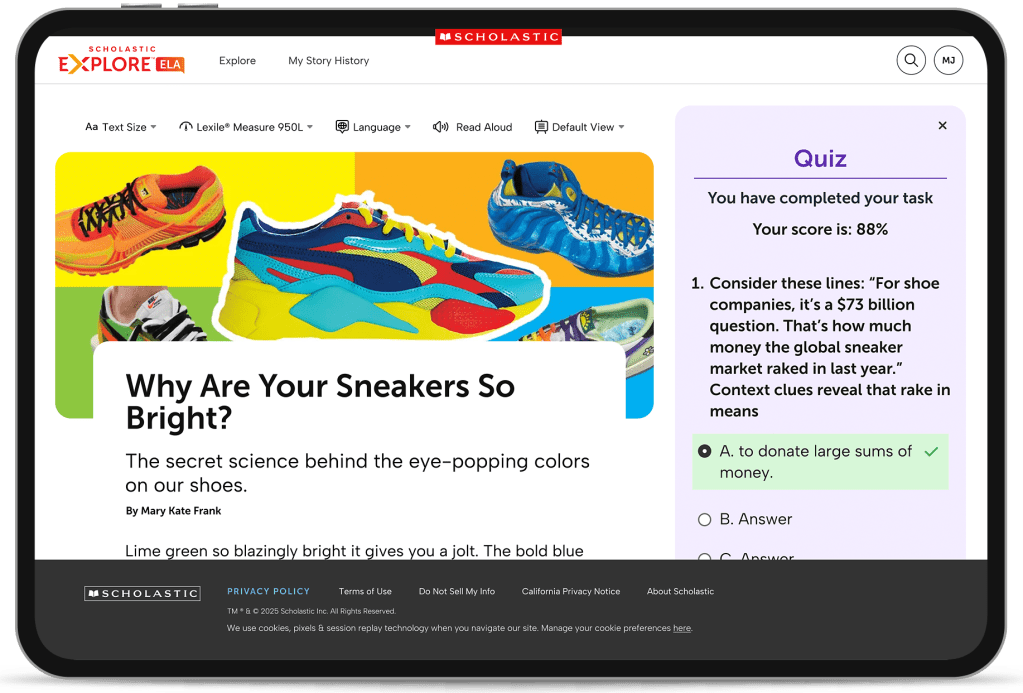
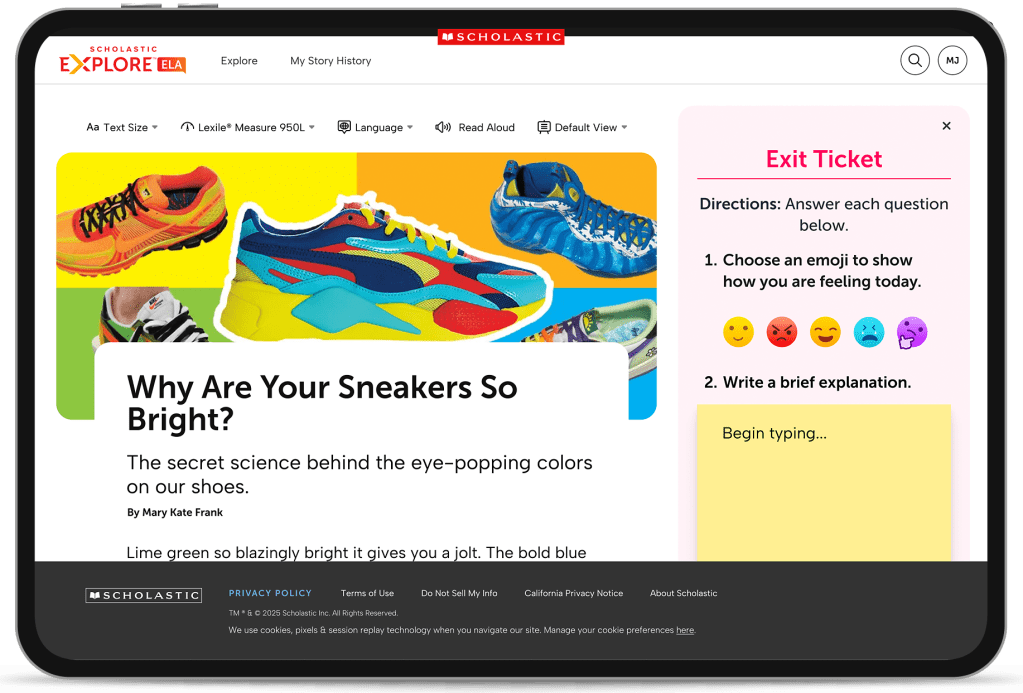
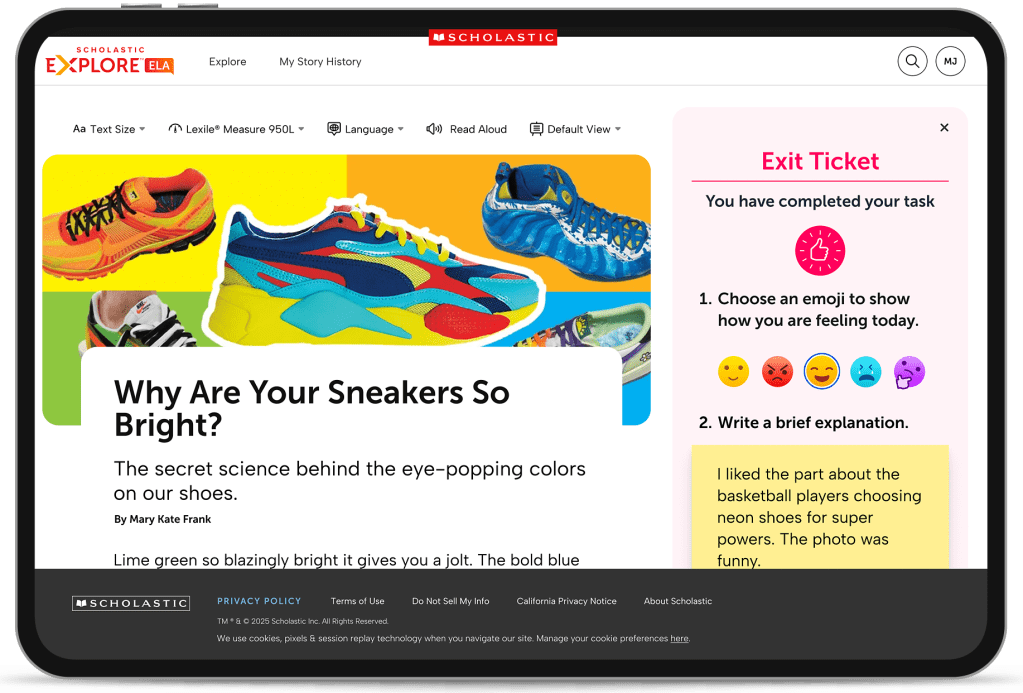
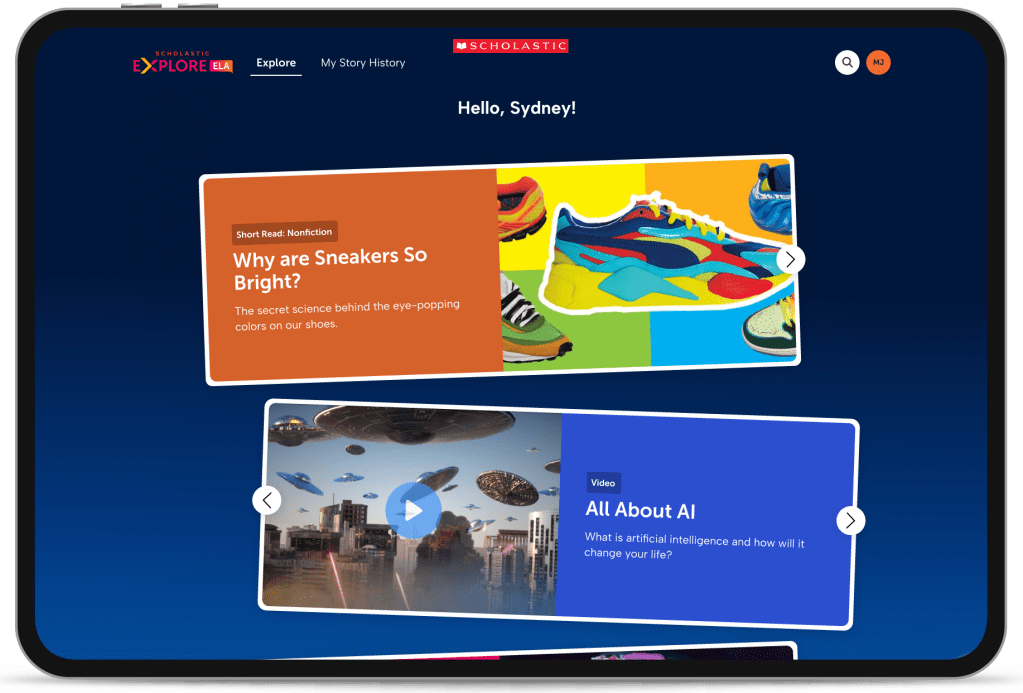
View the working demos that represent my direct contribution to the Explore ELA platform
*These demos are intended to be viewed by Design and Techinical teams and therefore require a Figma account to view
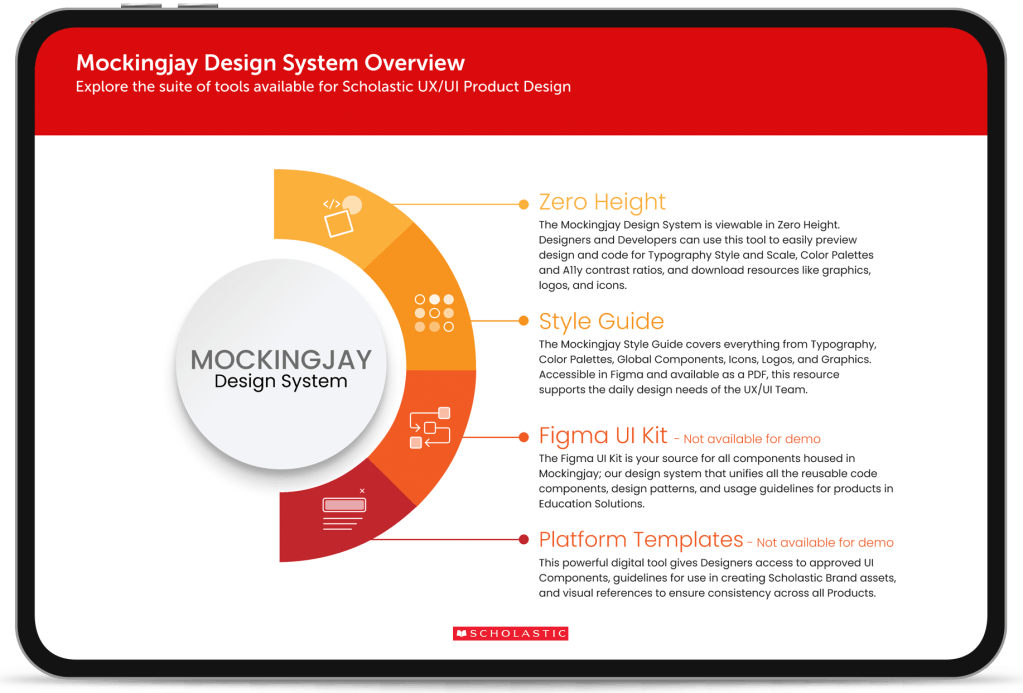
Organizational Outcomes
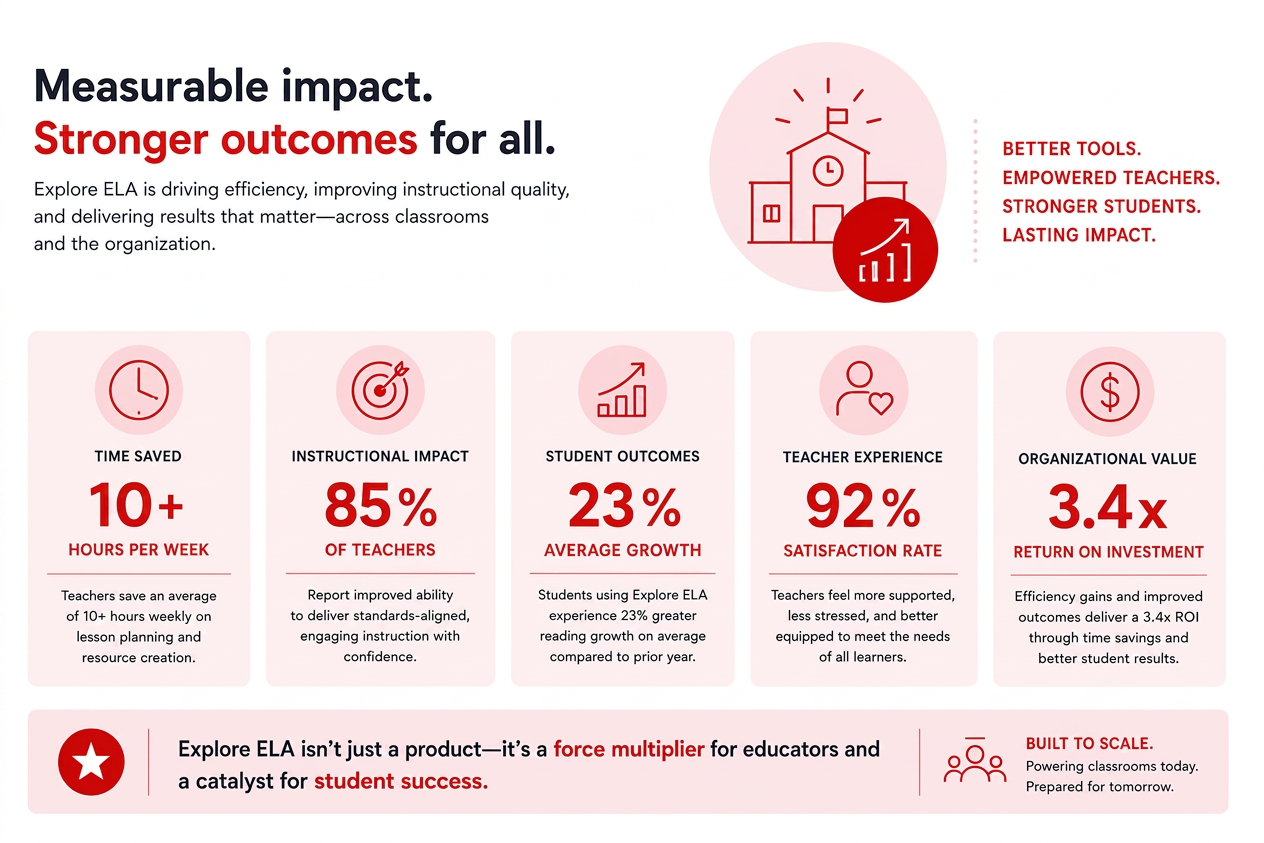
The work established a scalable UX foundation, reusable interaction patterns, accessible design standards, stronger collaboration across disciplines, and a framework capable of supporting future curriculum products.
Reflection
This project reinforced that effective educational product design extends far beyond creating engaging interfaces—it requires designing experiences that support measurable learning outcomes for both students and educators. Throughout the project, I learned the importance of balancing the needs of multiple user groups while maintaining a cohesive instructional experience. Every design decision was evaluated not only for usability and visual appeal, but also for its ability to improve reading comprehension, encourage student engagement, and provide teachers with meaningful insights into student progress. By organizing the experience around a structured learning journey, we transformed what had been a collection of disconnected activities into a unified digital teaching tool that supported classroom instruction before, during, and after reading.
From a product design perspective, this project strengthened my ability to think beyond individual screens and focus on end-to-end user experiences that align with business objectives, educational standards, and user needs. It demonstrated the value of simplifying complex workflows, designing for multiple stakeholders simultaneously, and using research-driven design decisions to improve both usability and instructional effectiveness. The experience continues to influence how I approach product strategy today—viewing design as a means of enabling better outcomes, fostering engagement, and creating scalable solutions that deliver measurable value for users and the organizations they serve.
 Jenn Isbell | Principal Product Designer / Strategist