
Building Trust Before Building Technology
How reframing a communication problem into a confidence problem transformed provider collaboration.
Project Context
WellBeam is a digital care coordination platform that connects home health providers, physicians, and healthcare organizations through a secure, integrated ecosystem. By streamlining clinical communication, documentation, referrals, care transitions, and patient monitoring, the platform helps care teams reduce administrative burden, improve collaboration, enable earlier clinical intervention, and deliver better patient outcomes across the continuum of care.
Within this broader ecosystem, my work focused on redesigning the clinical escalation experience between home health clinicians and physicians—transforming fragmented communication into structured, trusted interactions that improved decision confidence and supported the platform’s larger care coordination goals.
My Role
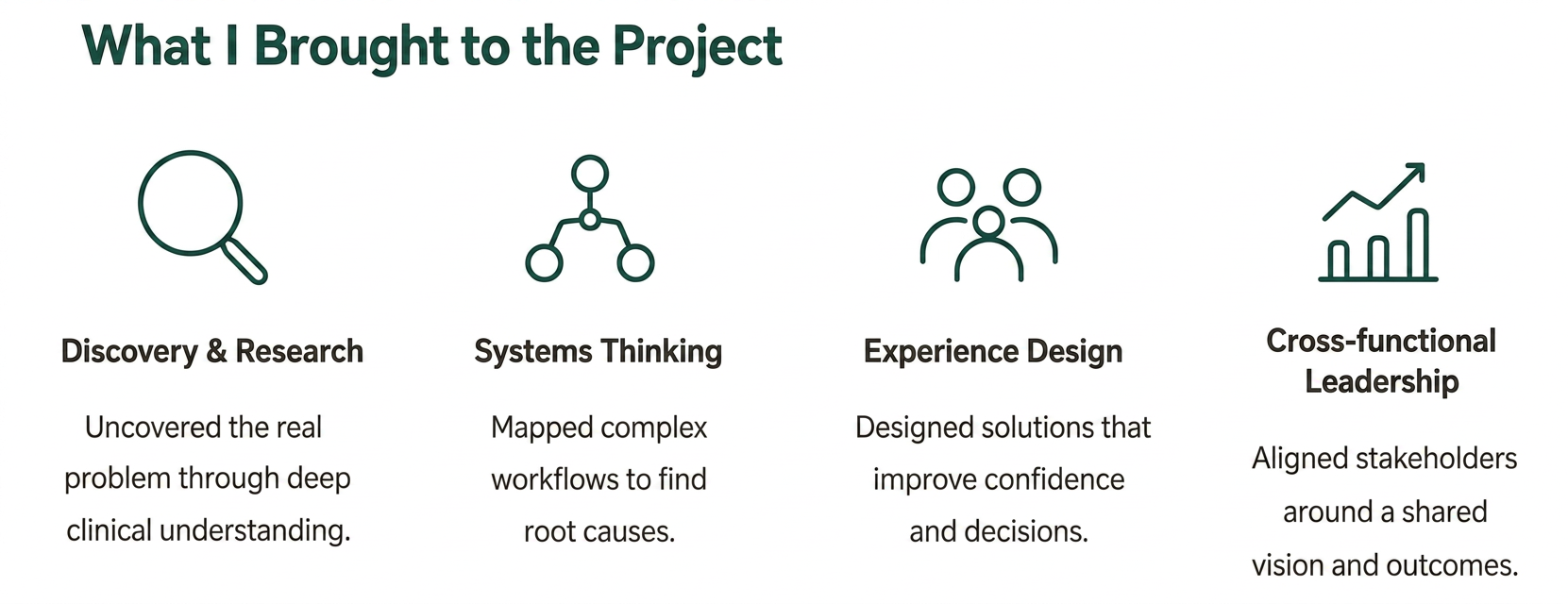
As the Head of UX and design lead for the clinician communication experience, I owned the end-to-end product design process—from discovery research and workflow analysis through interaction design, prototyping, usability testing, and cross-functional collaboration. Working closely with clinicians, product leaders, and engineering, I helped redefine the communication challenge as one of trust and decision confidence, designing structured clinical escalation workflows that became a key component of WellBeam’s broader care coordination platform. This case study represents the portion of the platform for which I was directly responsible.
The Business Request
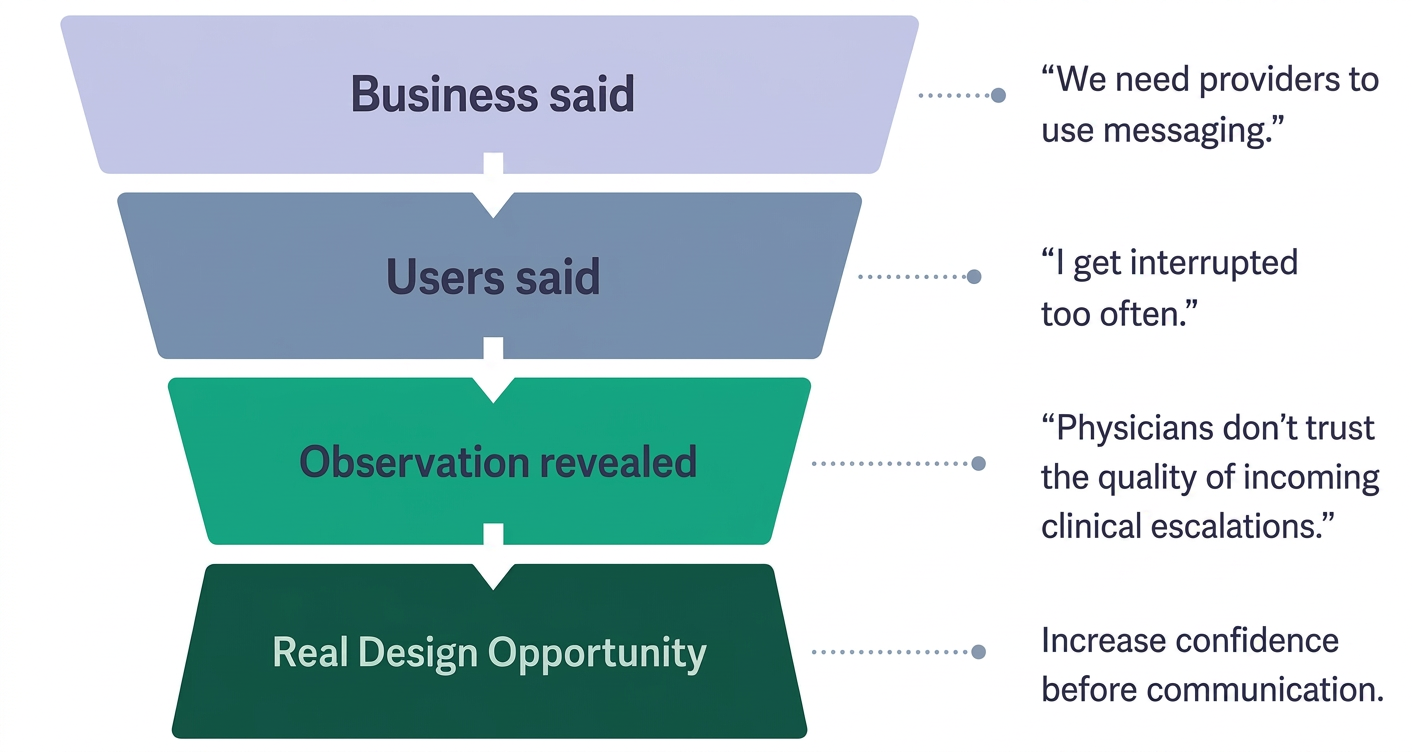
WellBeam approached the team with a familiar challenge. Increase provider adoption of their secure messaging platform. At first glance, the request appeared straightforward. Improve the messaging experience so clinicians would engage more frequently. But after spending time with physicians, nurses, and clinical workflows, it became clear that adoption wasn’t the problem. Messaging wasn’t broken. Trust was.
The Problem Statement
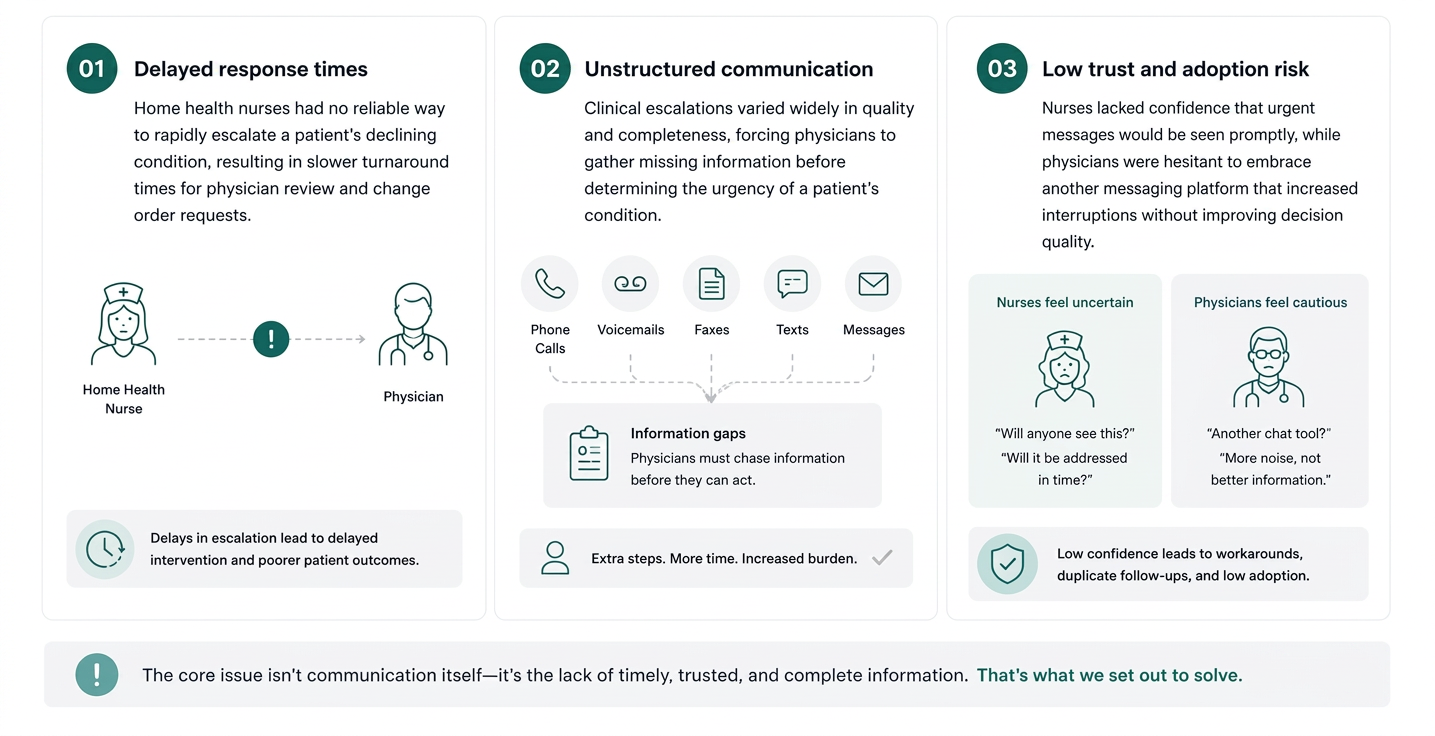
Home health nurses are often the first to recognize when a patient’s condition begins to decline, but escalating those concerns to the hospital care team was a slow, fragmented, and inconsistent process. Critical updates were communicated through phone calls, voicemails, faxes, and unstructured messages, creating delays at moments when timely intervention was essential.
For physicians, every escalation required additional effort to determine whether the situation was truly urgent. Without consistent clinical context or standardized assessments, providers had to validate the information before they could confidently change orders or intervene. The communication process itself introduced friction into clinical decision-making.
At the same time, nurses lacked confidence that their escalations would be seen or acted upon quickly. This uncertainty encouraged repeated follow-ups and workarounds, while physicians expressed reluctance to adopt another chat-based communication tool that risked adding interruptions without improving the quality of information.
The result was a communication ecosystem characterized by delayed responses, fragmented workflows, and low trust—where the greatest barrier wasn’t sending messages, but ensuring that every escalation contained the information needed to support timely, confident clinical decisions.
What the Problem Looks Like
Escalating a patient’s declining condition shouldn’t be this hard. The exisiting process created fricition, delays in decisions, and eroded trust across the care teams.
What We Discovered
Physicians weren’t ignoring messages because they disliked chat. They were hesitant because they couldn’t trust the quality of nurse escalations.
Every interruption required them
to mentally answer questions like:
- Has this already been assessed?
- Is this actually urgent?
- What information is missing?
- Am I about to spend five minutes gathering context before
making a decision?
The Design Challenge
How might we create a communication workflow that empowers nurses while giving physicians confidence that each escalation contains the right urgency, context, and supporting evidence to enable timely clinical decisions?
Design Strategy
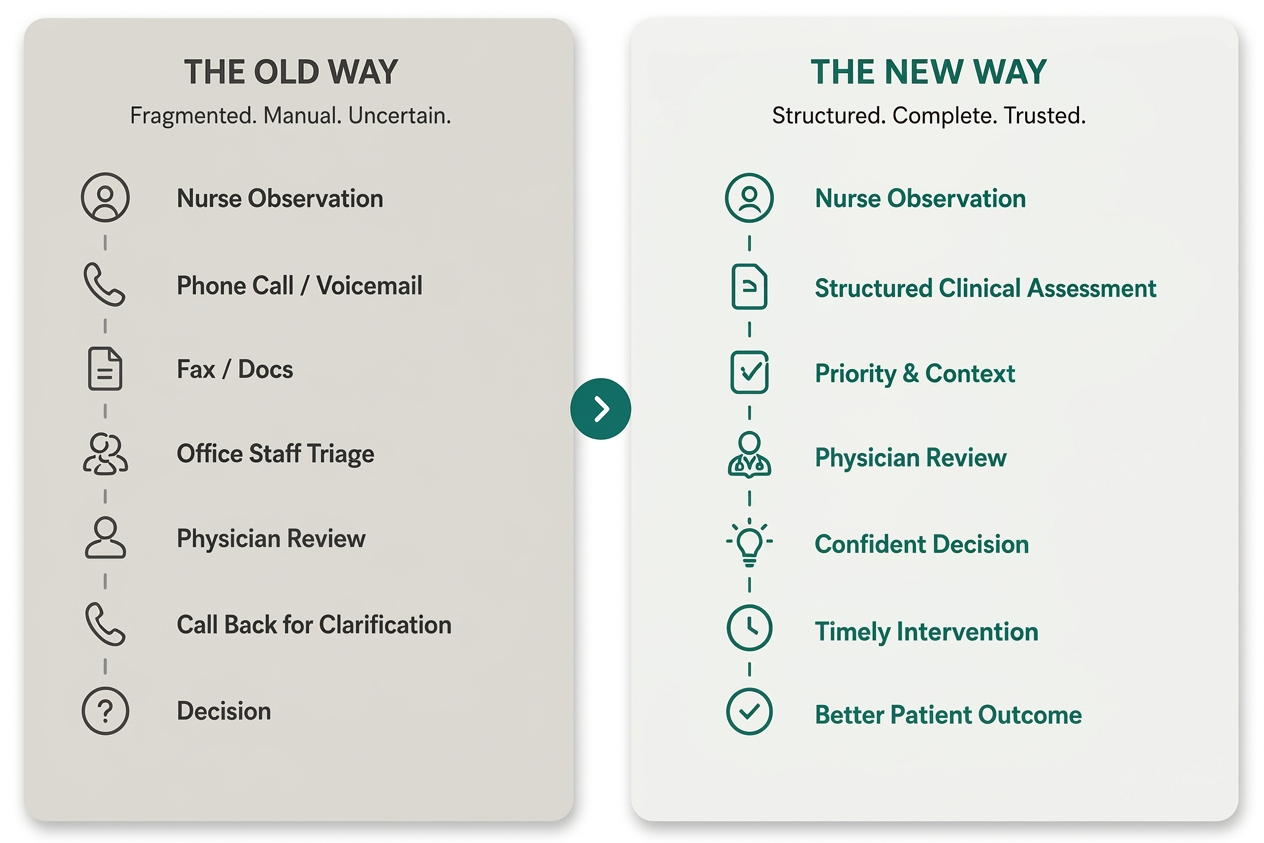
Rather than redesigning chat, we focused on improving the quality of the clinical signal entering the conversation. Working alongside clinicians and stakeholders, we introduced structured escalation workflows that guided nurses through the information physicians consistently needed to evaluate urgency. Instead of asking physicians to gather context after opening a message, the experience surfaced that context before the conversation even began. This reduced uncertainty, improved confidence, and made interruptions more meaningful.
Key Design Decisions
- Structured escalation replaced free-text messaging.
- Urgency levels established response expectations.
- Clinical categories communicated intent before reading a message.
- Required context reduced ambiguity.
- Images and PDFs provided supporting evidence.
- Persistent patient context reduced cognitive switching.
The Design
The final experience introduced a structured clinical escalation workflow that guided home health clinicians through a validated series of triage questions before escalating a patient’s declining condition. By capturing consistent clinical context upfront, physicians received the information they needed to quickly assess urgency and respond with greater confidence. Rather than redesigning messaging, the solution redesigned trust—transforming fragmented communication into a structured decision-support experience that reduced uncertainty, improved collaboration, and enabled faster, more informed clinical decisions.
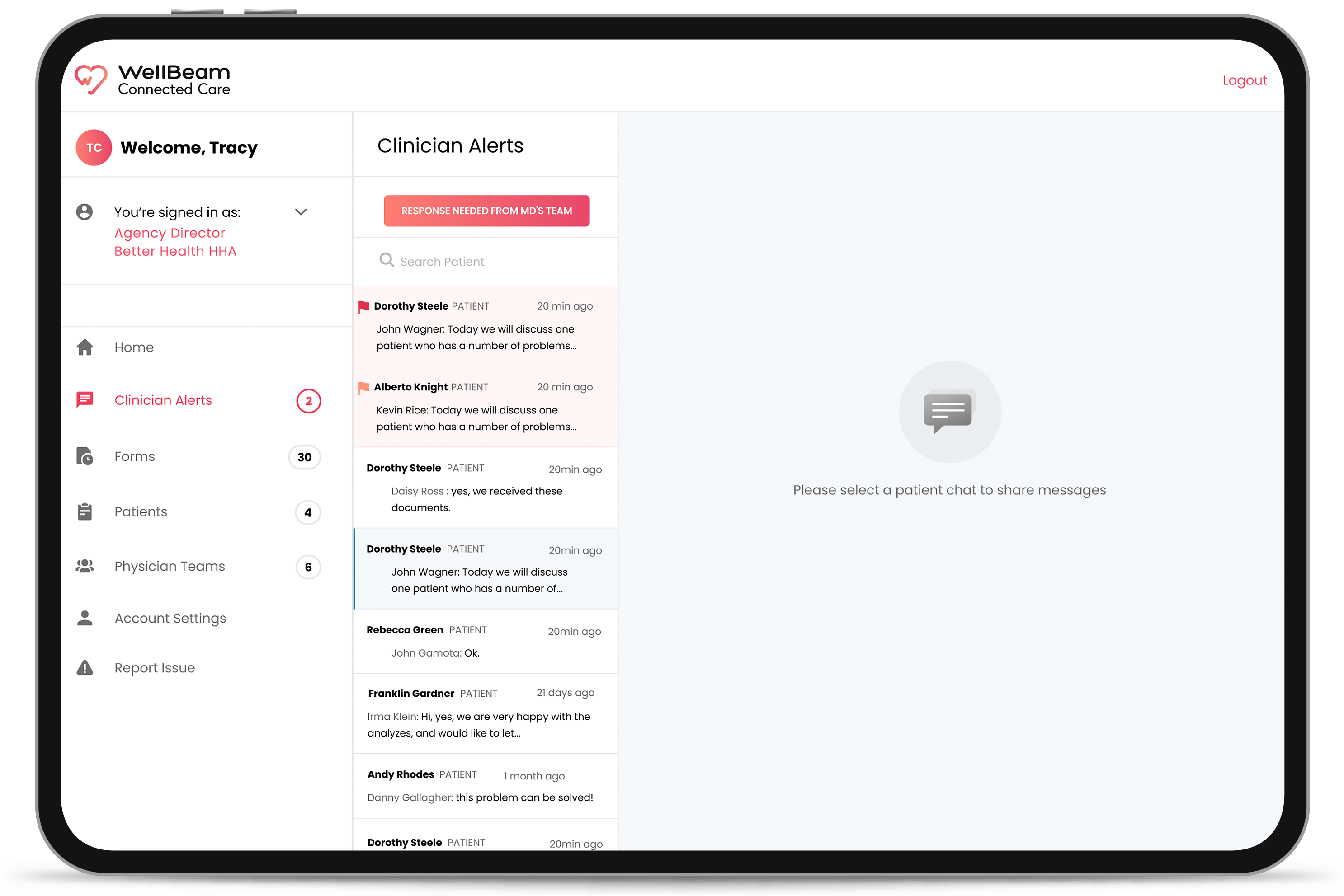
Clinicians enter the chat by selecting a Patient message from the chat list 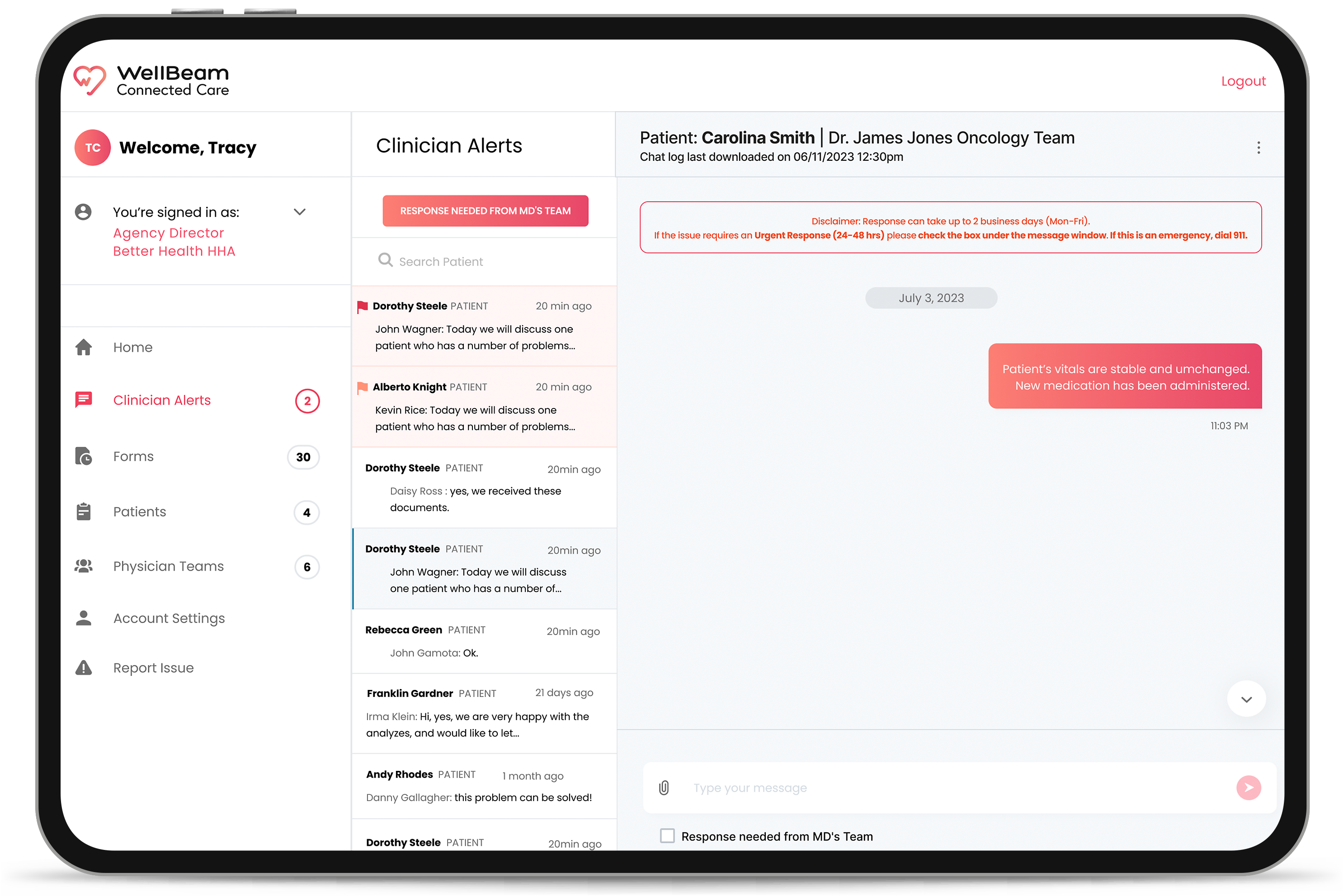
The chat thread for the selected patient is loaded into the main frame 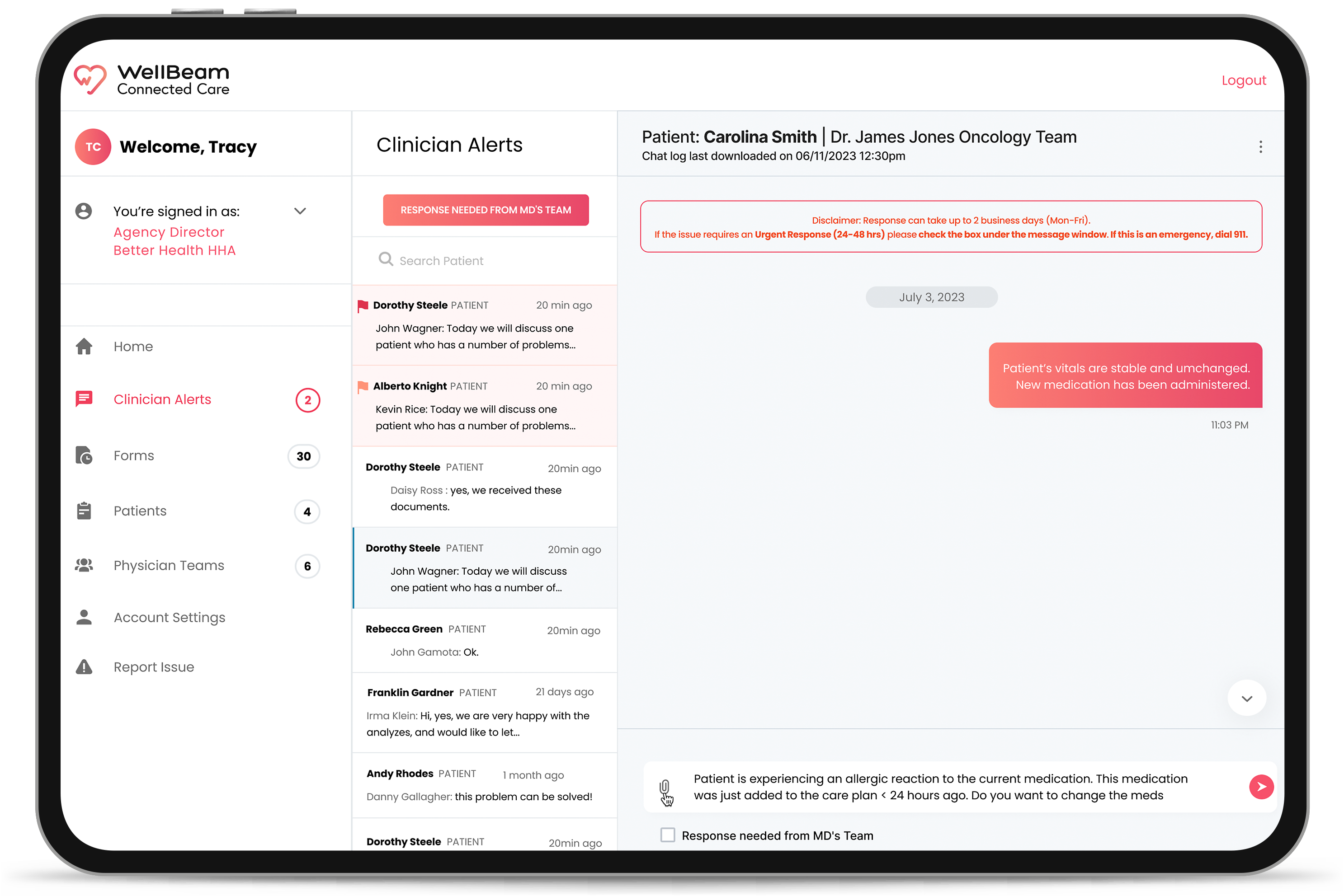
The Clinician enters a new message into the dialog field. Supporting files are added by clicking the file icon 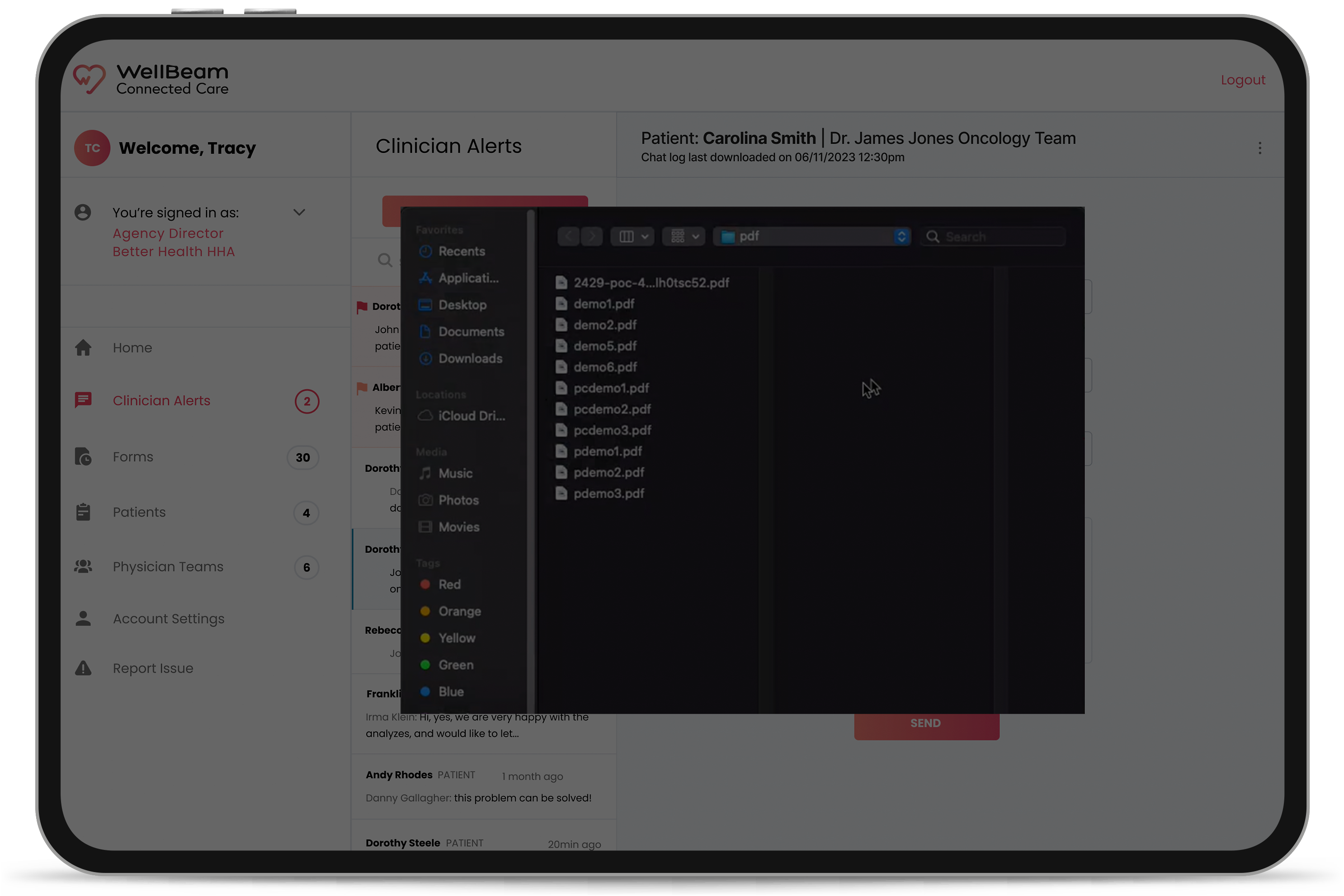
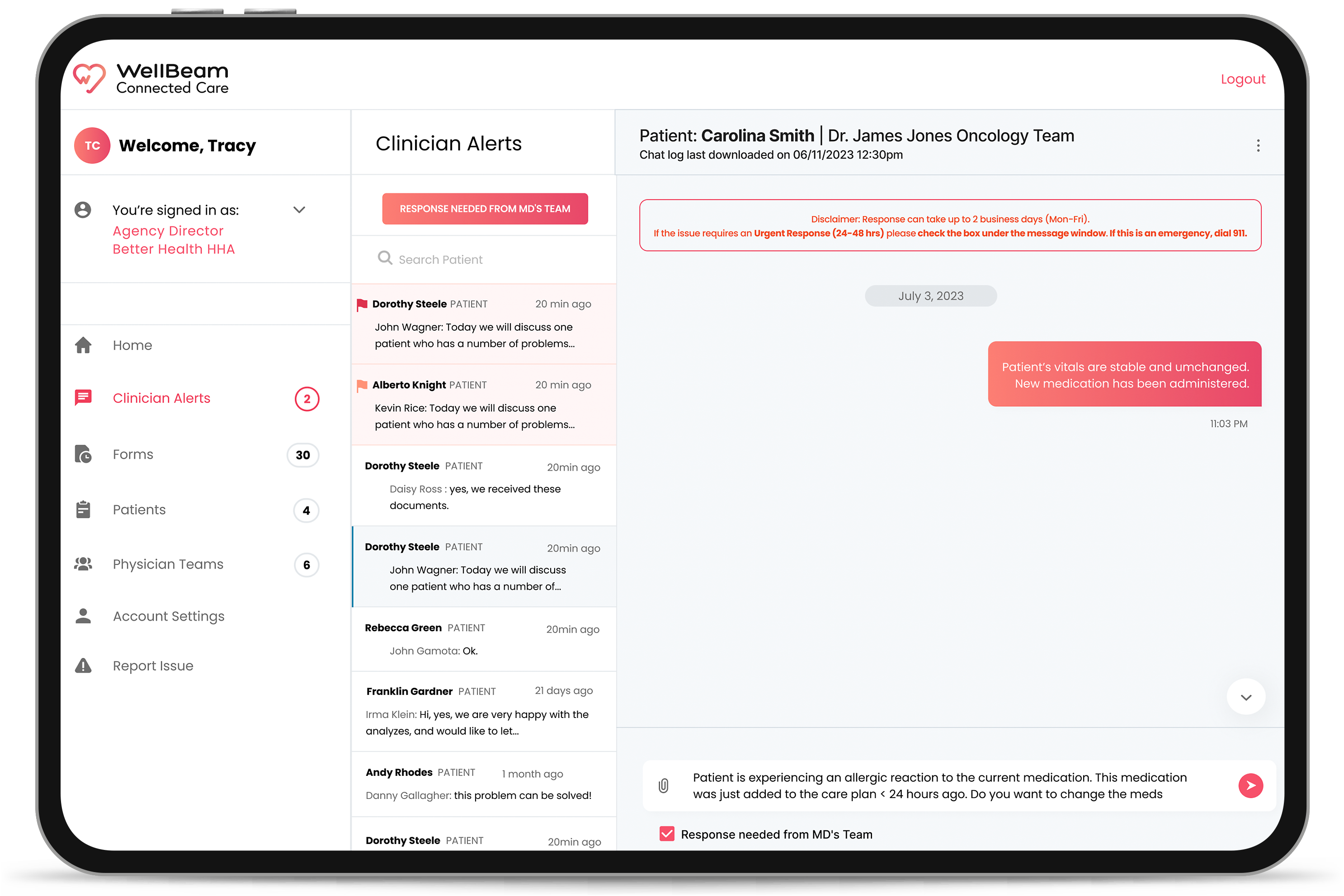
The Clinician checks the box indicting a response is needed from the MD Team 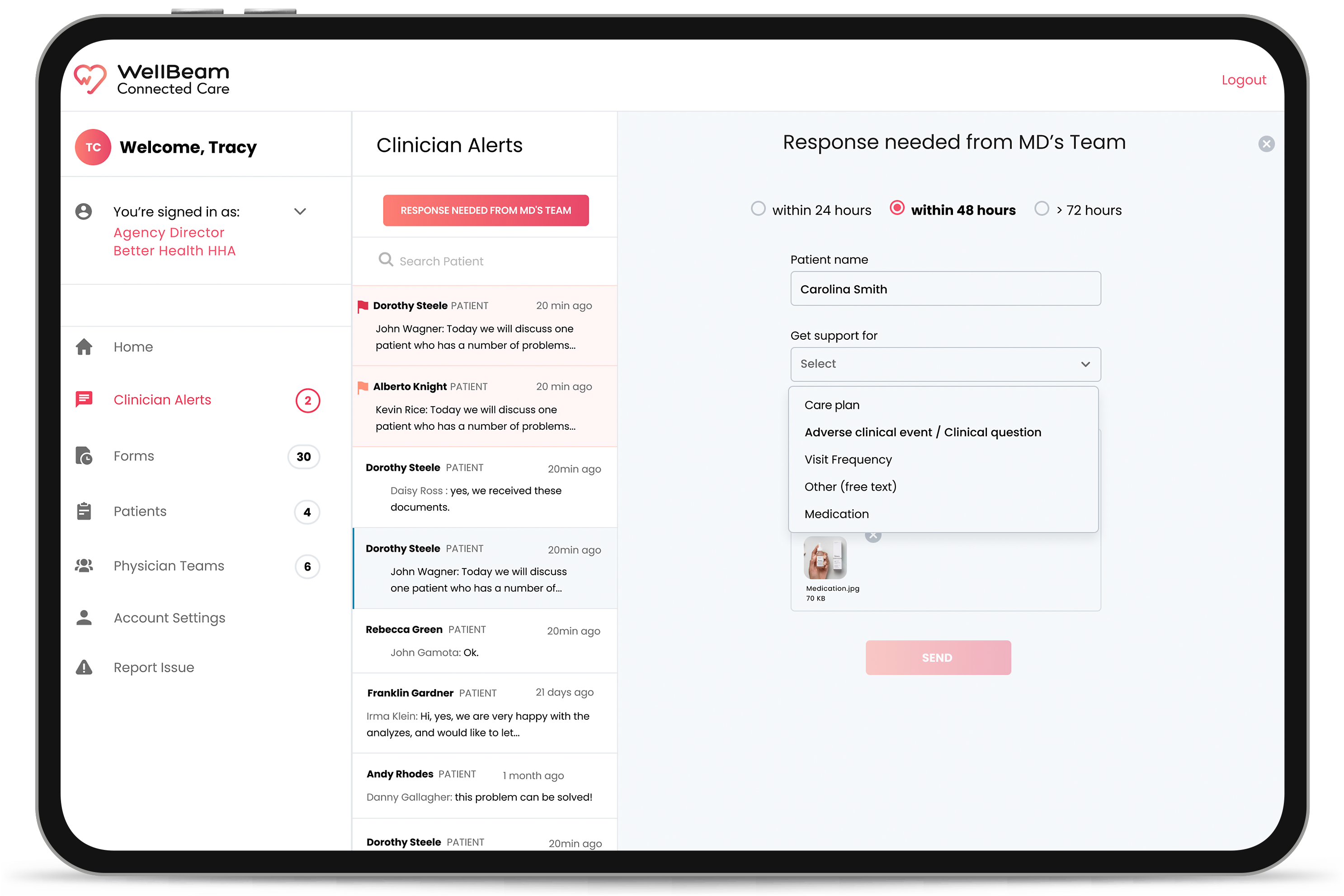
If the response needed button is selected, the message escalation triage begins with a radio button selection time boxing the urgency. Subsequent validation questions are prompted by this initial radio button reponse 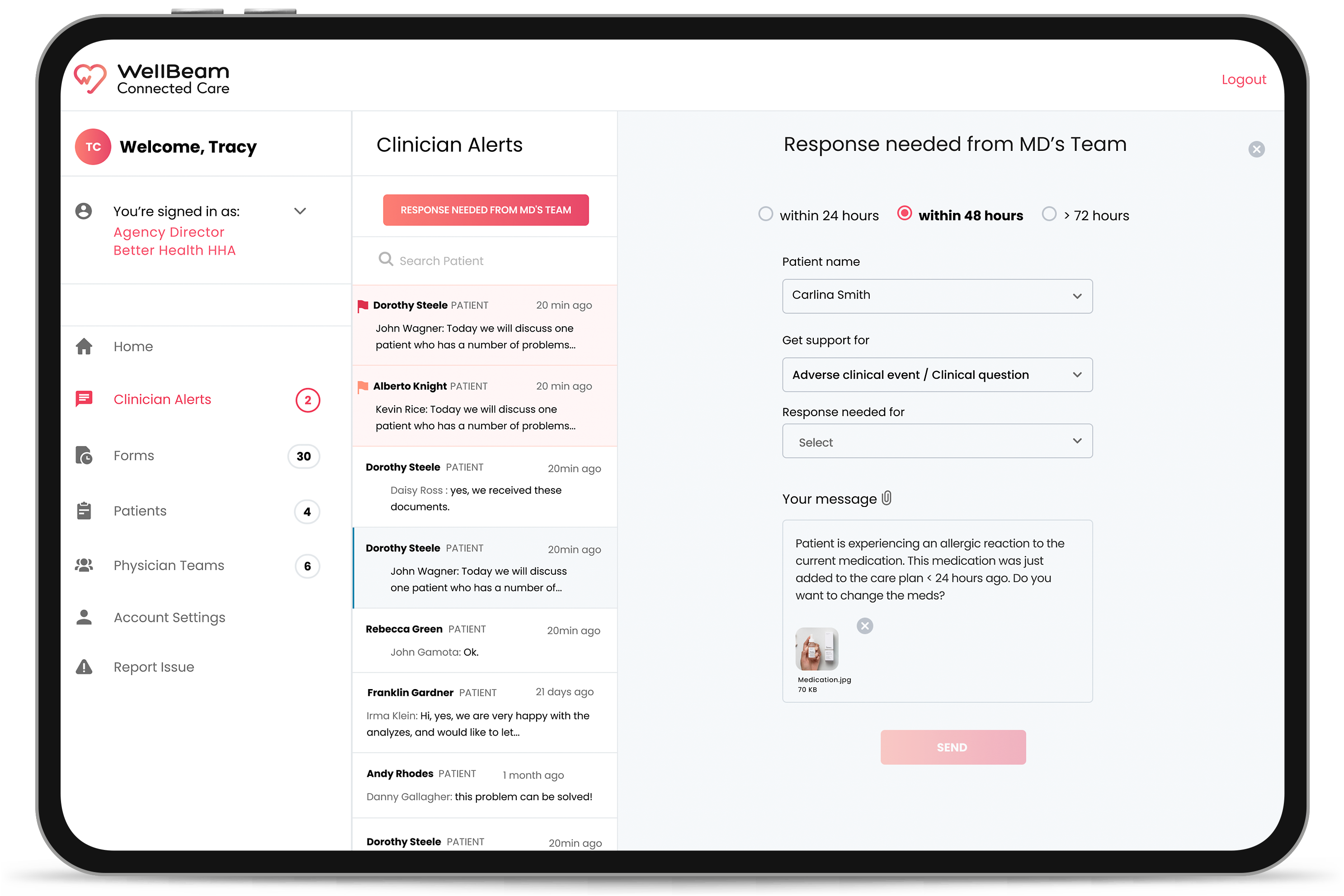
Each question builds on the previous response through a series of dropdown boxes 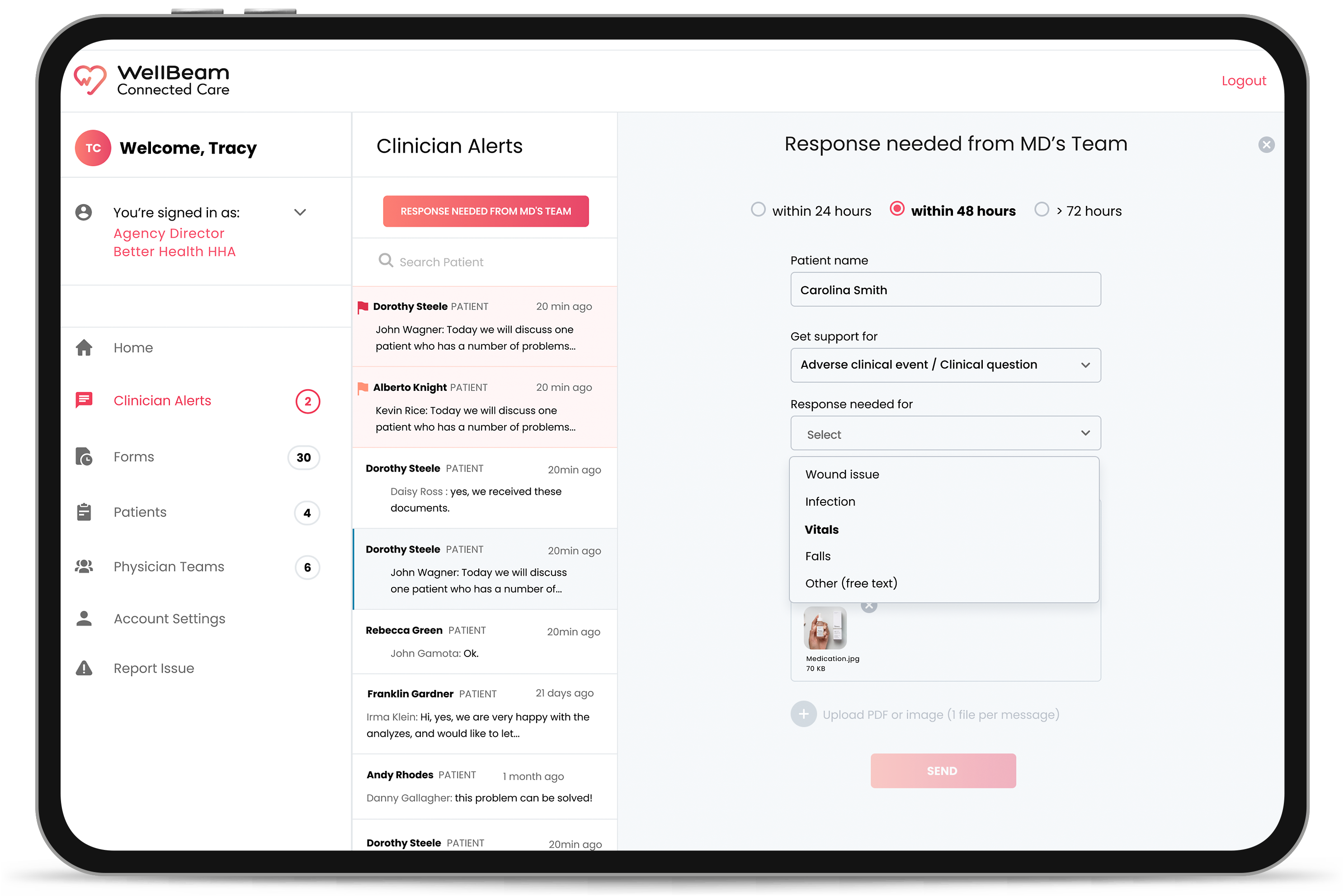
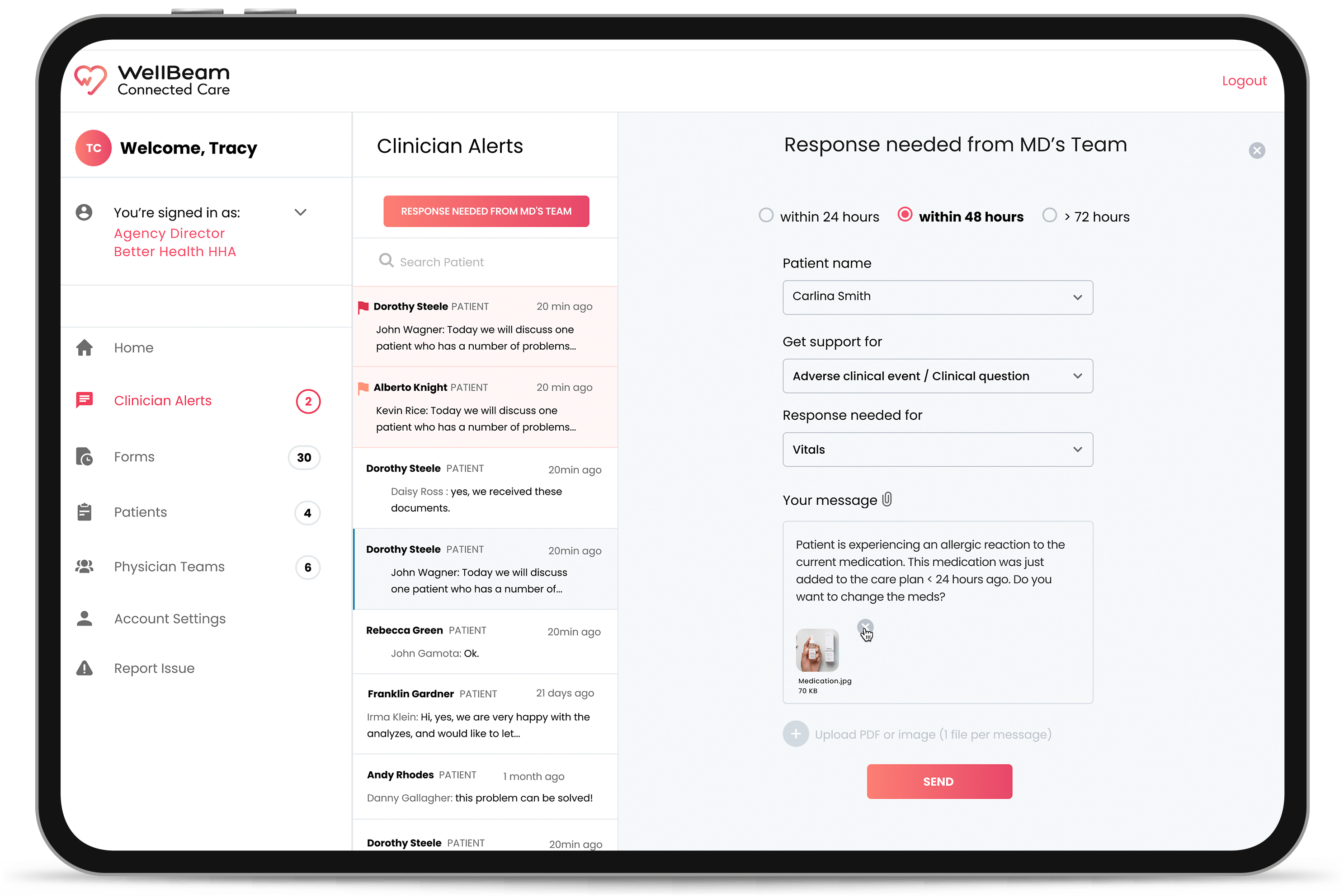
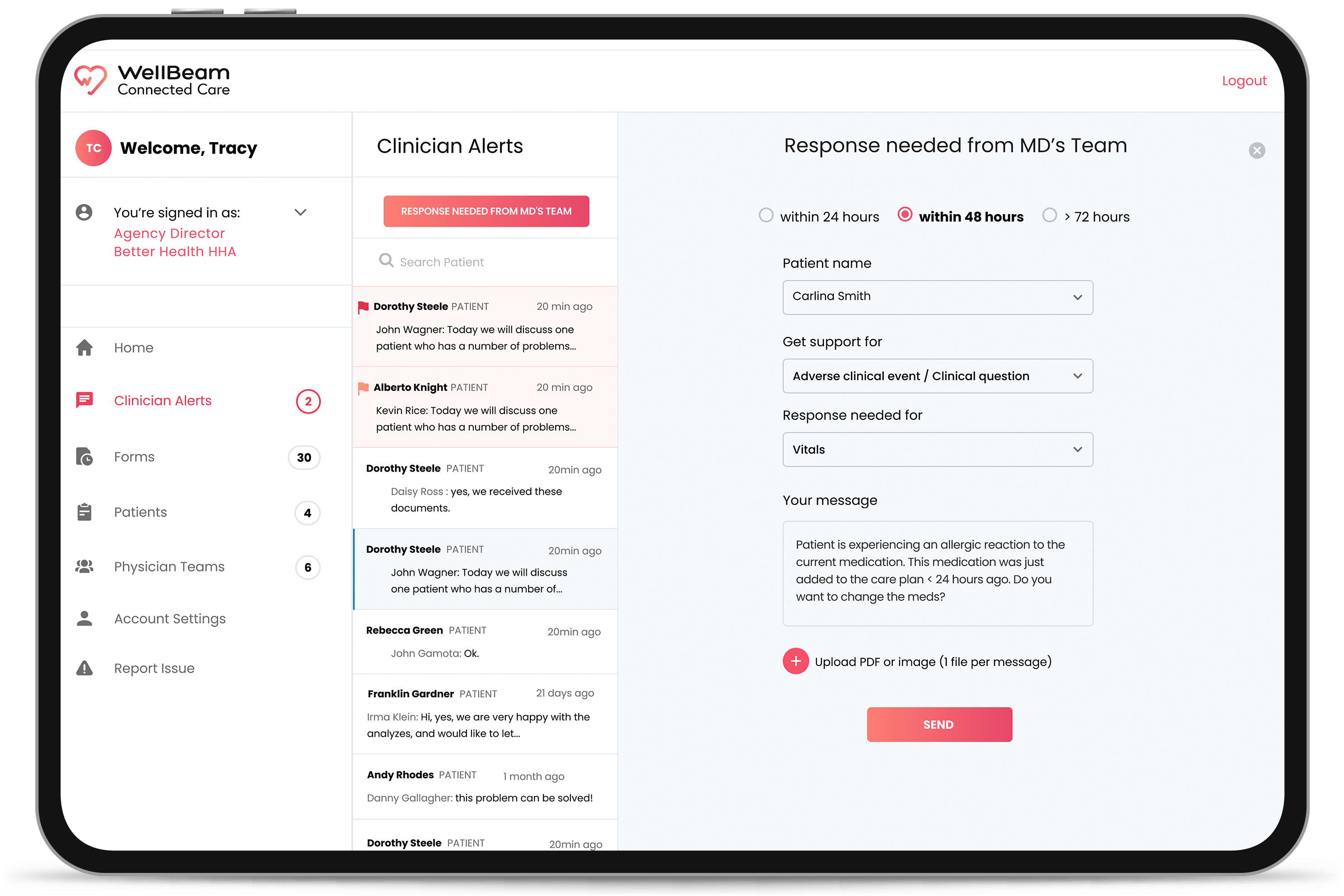
Once all the required fields have been completed the Clinician reviews their inputs for accuracy before hitting send 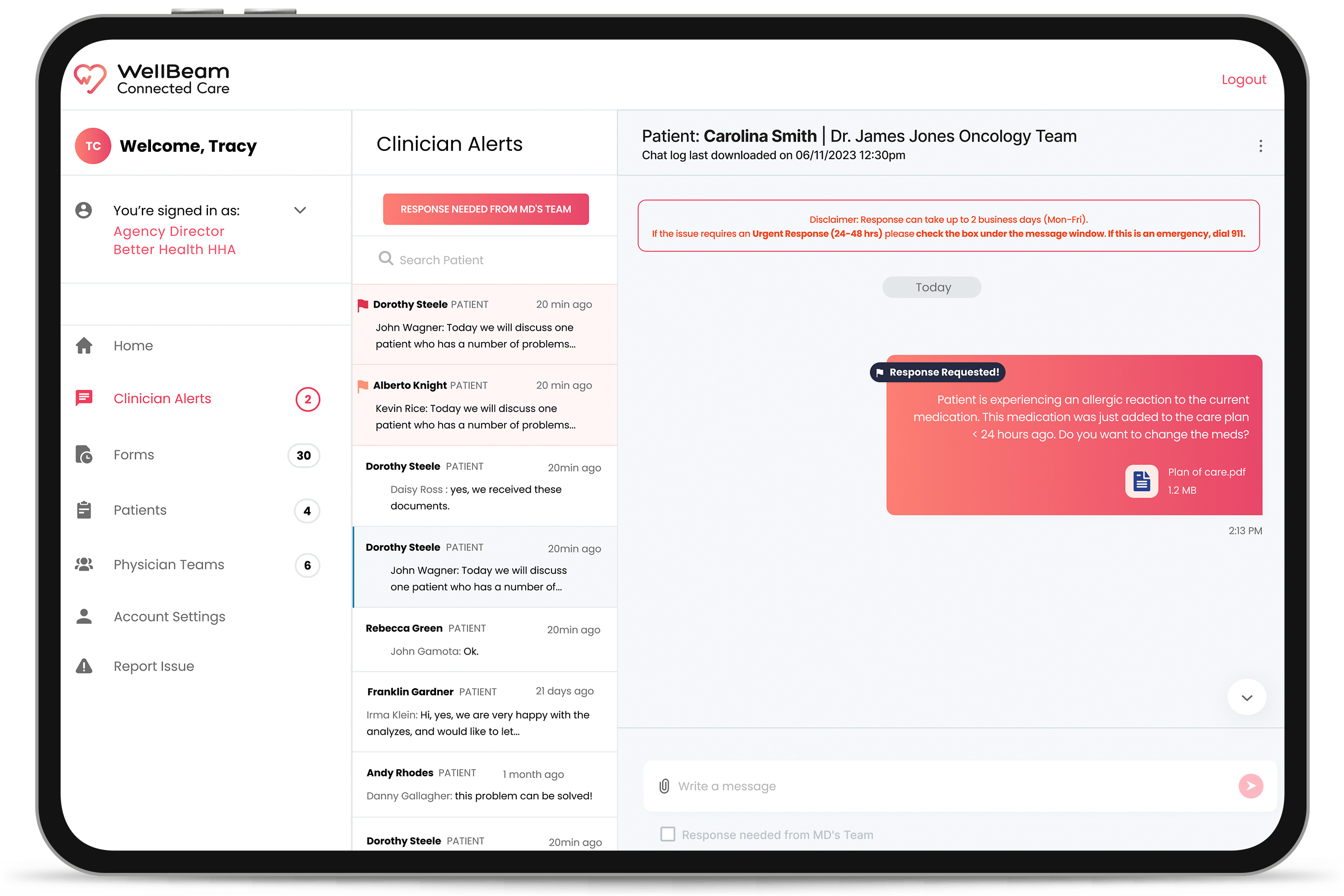
The Clinician’s question populates in the live chat and the ability to send additional “urgent” messages is disabled until the MD Team responds
Measurable Impact
Trust cannot be measured directly, but it can be observed through operational outcomes. By standardizing urgency, intent, and supporting evidence before a message was sent, the workflow reduced decision friction and increased physician confidence that each interruption represented an appropriate use of their attention.
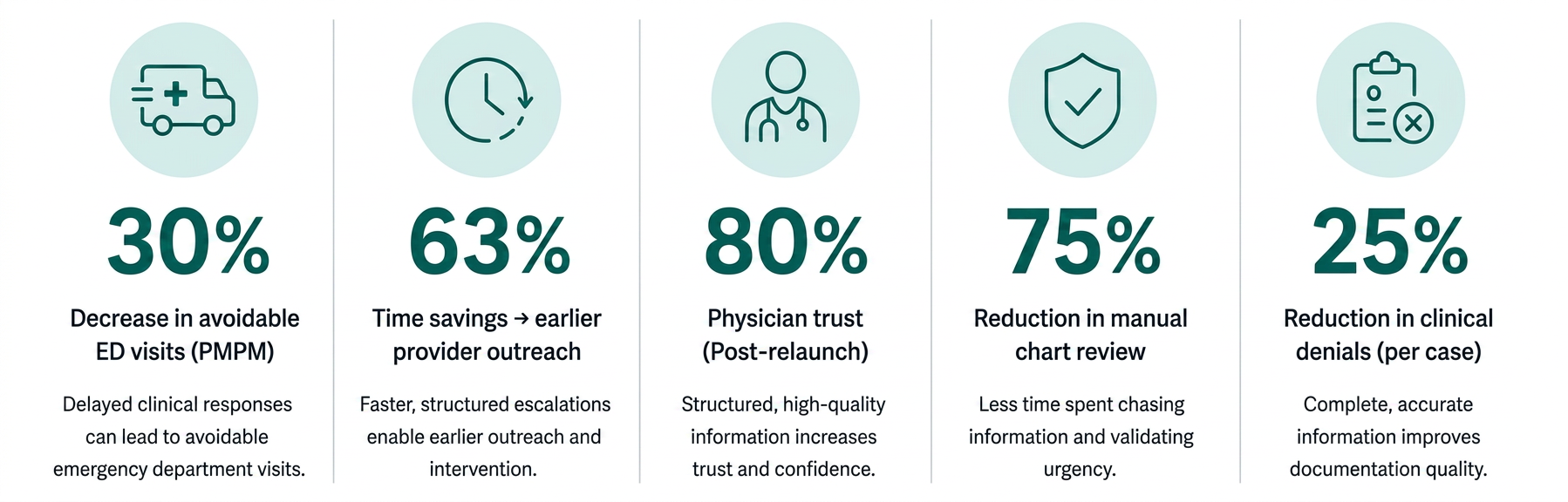
Note: These are platform-level outcomes reported by WellBeam deployments. My contribution focused on the clinical communication workflow that supported these broader operational improvements.
Reflection
This project reinforced a principle that continues to guide my work: communication succeeds only when people trust the quality of the information being exchanged. I wasn’t designing a messaging tool—I was designing a system that helped physicians trust the appropriateness of every clinical escalation.
 Jenn Isbell | Principal Product Designer / Strategist